

Why these myths stick around
Auto insurance touches nearly every driver in the country, yet the way policies actually work stays murky for many people. Coverage terms rarely come up in everyday conversation, and the documents insurers send can be dense. That combination leaves plenty of room for misunderstandings to spread and go uncorrected for years. The six myths below are among the most common, and each one can lead to a coverage decision a driver later regrets.
Myth
Red cars cost more to insure because insurers charge extra for them.
Fact
Insurers do not ask for your car's color when calculating a premium. Color plays no role in how rates are set.
This myth has circulated for decades. When an insurer quotes your policy, the factors that matter include the vehicle's make, model, year, engine size, trim level, and safety ratings. The vehicle identification number (VIN) gives insurers all of that. Color is simply not part of the equation.
Myth
Meeting the state minimum coverage requirement means you are fully protected after an accident.
Fact
State minimums set only the legal floor. In many cases they are not enough to cover the full cost of a serious accident.
Every state that requires liability insurance sets a minimum dollar limit for bodily injury and property damage. Those limits can be low enough that a single accident exceeds them, leaving you responsible for the remainder out of pocket. If the other driver sues you for damages beyond your policy limit, your personal assets could be at risk. State minimums also do not include coverage for your own vehicle or medical bills unless you add those separately. See how fault and coverage type interact for more on what each coverage type actually pays.
Myth
Comprehensive coverage protects you in a collision with another car.
Fact
Comprehensive coverage applies to damage from non-collision events such as theft, fire, hail, floods, and animal strikes. Collision coverage handles crashes.
The names can mislead. Comprehensive does not mean "covers everything"; it covers a specific list of non-collision perils defined in your policy. If you hit another car or a guardrail, that falls under collision coverage. If a tree falls on your parked car during a storm, that is comprehensive. Many drivers carry one without the other and discover the gap only after a claim. What happens after you file an auto insurance claim walks through how the claims process unfolds once you report a loss.
Myth
Filing any claim will automatically raise your premium.
Fact
Whether a claim affects your rate depends on who was at fault, the size of the claim, your insurer's policies, and your claims history.
A single not-at-fault claim or a small glass claim often has little to no effect on your premium, though this varies by insurer and state. At-fault claims, particularly those involving injuries or significant property damage, are more likely to trigger a rate adjustment at renewal. Some policies include accident forgiveness provisions that prevent a first at-fault accident from raising your rate. Check your policy documents or ask your agent directly rather than assuming a claim will cost you more.
Myth
Your credit score has nothing to do with your auto insurance rate.
Fact
In most U.S. states, insurers use a credit-based insurance score as one factor in setting premiums. A handful of states restrict or ban the practice.
A credit-based insurance score is not identical to a FICO credit score, but it draws on similar data: payment history, outstanding balances, and length of credit history. Insurers use it because statistical models show a correlation between credit-based scores and claim frequency. California, Hawaii, Massachusetts, and Michigan prohibit or limit its use in auto insurance pricing. If you live elsewhere, your credit profile likely affects your rate to some degree.
Myth
Your personal auto policy covers your car when you drive for a rideshare or delivery app.
Fact
Standard personal auto policies generally exclude coverage during commercial or for-hire use, including rideshare and delivery driving.
When you log into a rideshare or delivery app and begin accepting rides or orders, most personal policies treat that period as a coverage gap. Some insurers offer rideshare endorsements that can be added to a personal policy; others require a separate commercial policy. If you use your vehicle regularly for app-based work and carry only a standard personal policy, verify your coverage directly with your insurer before your next shift. A non-owner auto insurance policy addresses a different gap but illustrates how personal and commercial use can create unexpected coverage issues.
What to do with this information
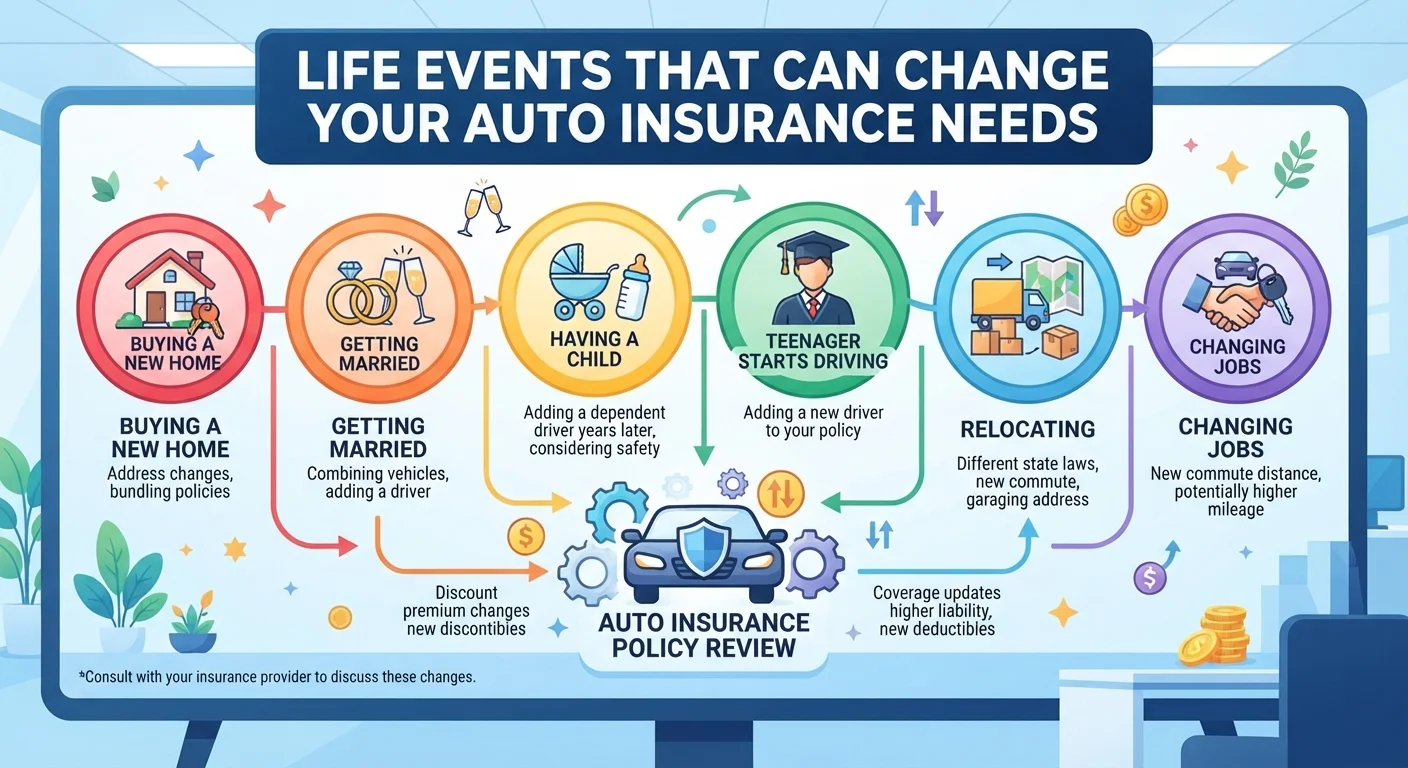
Knowing what your policy does not cover matters as much as knowing what it does. Pull out your declarations page, which is the summary sheet at the front of your policy, and check your coverage types and limits against what you actually need. If you drive for a rideshare or delivery platform, contact your insurer before your next shift. If you live in a state that allows credit-based scoring, improving your credit profile over time can affect your premium at renewal.
Before committing to or renewing any policy, a review of your specific situation helps. The questions to ask before choosing an auto insurance plan covers what to confirm with your insurer before you sign. Coverage decisions ripple beyond just your car; if you rent your home, your housing status shapes other insurance needs worth knowing about too.
Gaps in coverage can appear without warning
Policy terms, exclusions, and coverage limits vary widely between insurers. Reading the declarations page and the full policy document is the only way to confirm what is actually covered. If any language is unclear, ask a licensed insurance agent to explain it before you need to file a claim.
This article is for general informational purposes only and is not personalized insurance, financial, or legal advice. Coverage terms, exclusions, and regulations vary by insurer and state. Read your actual policy documents and consult a licensed insurance agent for guidance specific to your situation.