Why your policy needs a second look after big changes
Auto insurance is not a set-it-and-forget-it purchase. Insurers price policies based on a snapshot of your life at the time you apply: where you live, who drives the car, how much you drive, and what you own. When that picture changes, your coverage may no longer match your situation or your budget.
The good news is that most policies allow mid-term updates, and some changes actually lower what you pay. The list below covers the life events most likely to shift what coverage makes sense for you. For a broader look at how insurers set your rate in the first place, see how auto insurance pricing is calculated.
This article is for general informational purposes only and is not personalized insurance, financial, or legal advice. Coverage terms, eligibility, and pricing vary by insurer and by state. Read your policy documents carefully and consult a licensed insurance agent for guidance specific to your situation.
Life events that affect your coverage needs
Getting married or entering a domestic partnership
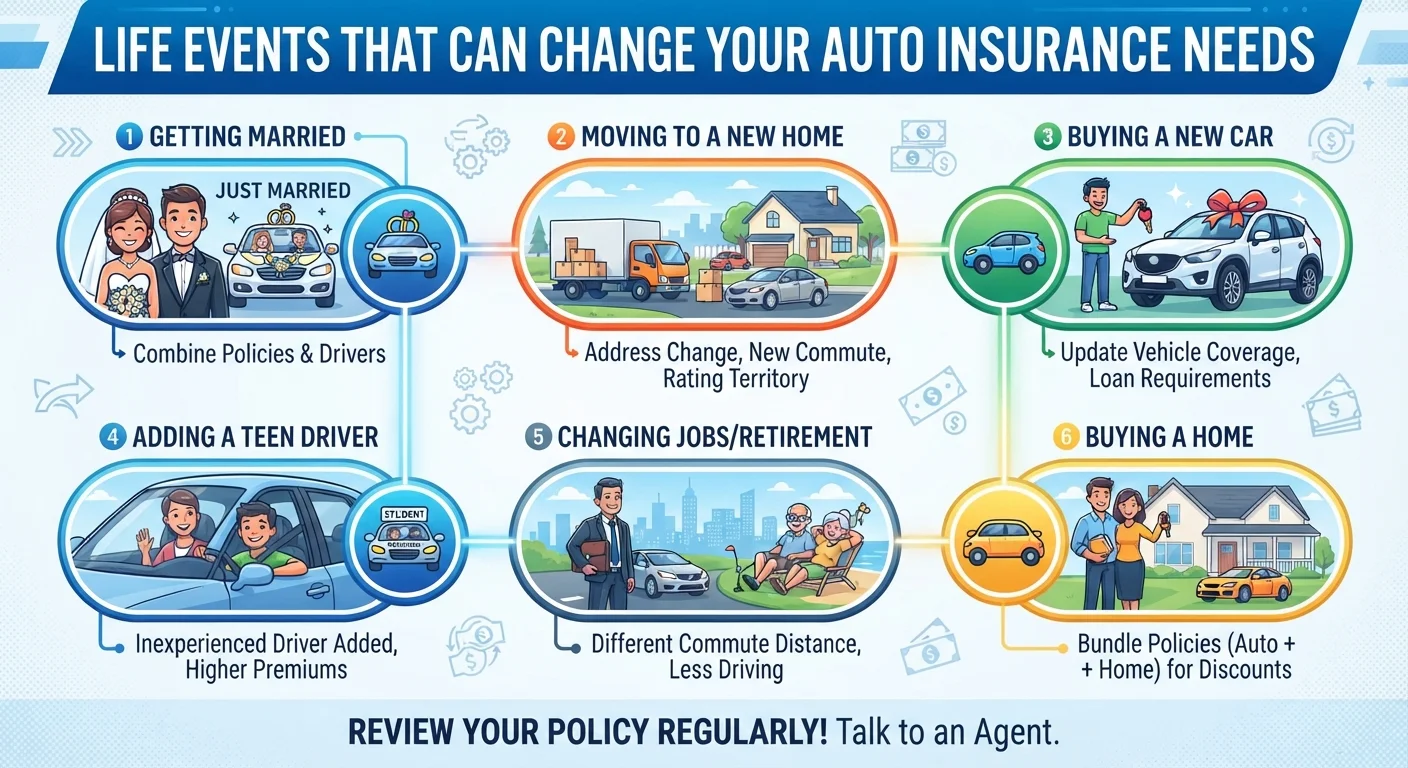
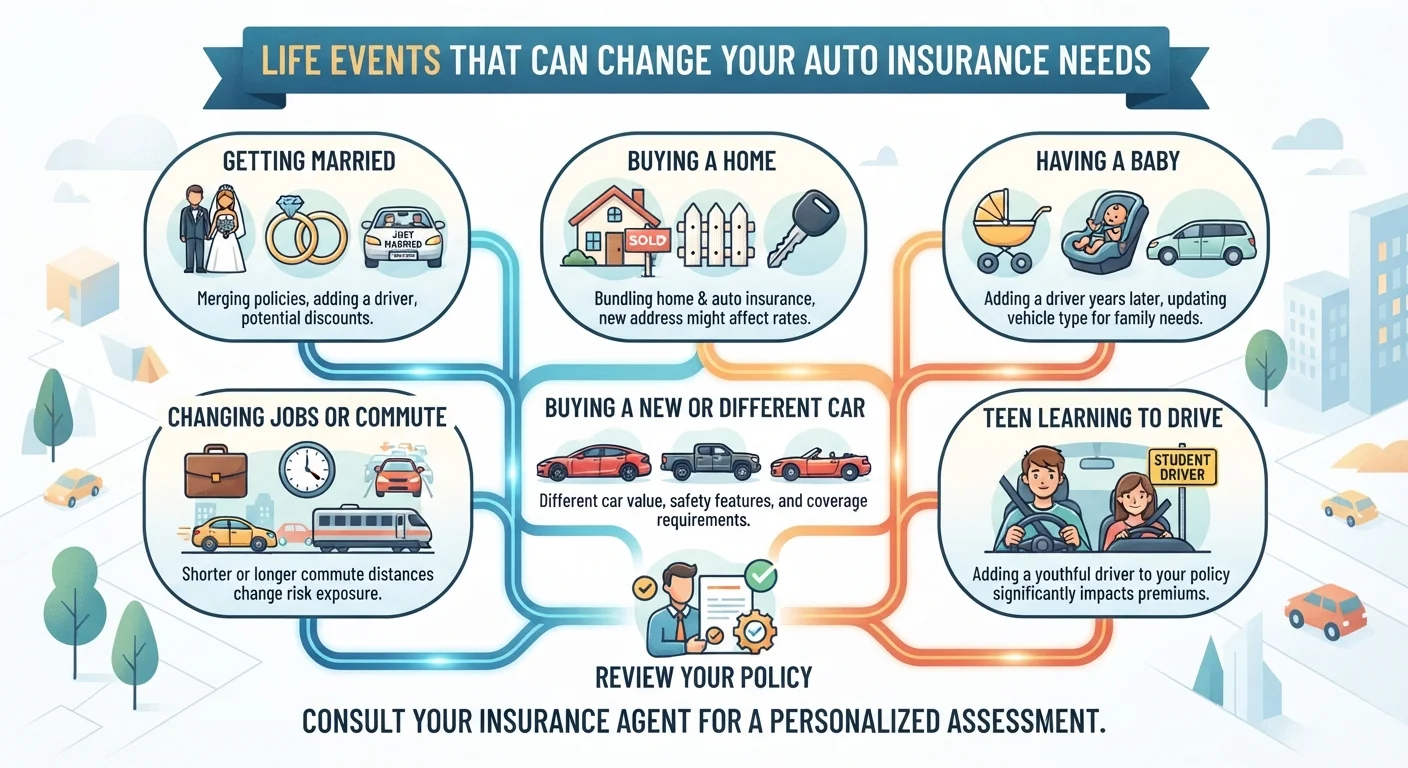
When two people combine households, insurers typically expect all licensed drivers living together to be listed on the same policy. Combining policies can simplify billing, and some carriers adjust rates based on the combined driving history of the household. If your new partner has a clean record, that may work in your favor. If their history includes accidents or violations, it could push costs up. Either way, you will want to notify your insurer promptly, because driving a car you are not listed on can create gaps at claim time.
Combining policies after marriage can shift your rate up or down depending on your partner's driving record.
Divorce or separation
Splitting a shared policy requires each person to get their own coverage. Before the policy is separated, confirm that no vehicle is left without coverage during the transition. If one person keeps a car that was previously on a joint policy, that individual needs a new policy in place before the shared one lapses. Courts sometimes address vehicle ownership in divorce proceedings, so it is worth knowing which vehicles each party is responsible for insuring before you make changes.
Make sure no vehicle goes uninsured during the transition from a shared policy to individual ones.
Adding a teen driver
A teenager with a new license is statistically more likely to be involved in an accident than an experienced driver. Insurers reflect that risk in the premium. Adding a teen to a policy typically raises the cost noticeably, sometimes by a significant percentage depending on the state and the carrier. It is also worth reviewing your liability and medical payment limits at this point, since a more vulnerable driver in the household is a reason to think carefully about whether minimum coverage is enough. Some carriers offer discounts for teens who complete a driver education course; ask your insurer whether that applies. For more on how a household member can affect your policy, see named driver exclusions on an auto policy.
Adding a teen driver often raises premiums substantially, making it a good time to review your liability limits.
Moving to a new address
Your ZIP code matters to an insurer. Population density, local accident rates, theft rates, and weather patterns all feed into how your address affects your rate. Moving within the same state will likely change your premium. Moving to a different state is more significant: each state sets its own minimum coverage requirements, and your current policy may not meet them. Notify your insurer before or immediately after you move, not months later. Driving on a policy with the wrong address listed can complicate a future claim.
Moving to a new state may mean your existing policy no longer meets local minimum coverage requirements.
Buying or financing a new vehicle
If you finance or lease a vehicle, the lender or leasing company almost always requires you to carry both collision coverage (which pays for damage to your own car in an accident) and comprehensive coverage (which covers theft, weather damage, and other non-collision events). These are not required by state law on a paid-off vehicle, so if you are upgrading from an older car you owned outright, your current policy may not include them. Confirm what coverage the lender requires before you drive off the lot.
Lenders typically require collision and comprehensive coverage on financed vehicles, even when state law does not.
Retiring or significantly reducing your driving
Annual mileage is one of the variables insurers use to set rates. If you are no longer commuting to work, your mileage may drop substantially. Some carriers offer lower rates for drivers below a certain annual mileage threshold, sometimes called low-mileage or usage-based pricing. When you report a major reduction in driving, ask your insurer whether your current rating accurately reflects your new habits or whether a different pricing tier applies.
Driving far fewer miles after retirement may qualify you for a lower-mileage pricing tier.
A household member develops a serious health condition
If someone in your household is no longer able to drive safely due to age or a medical condition, removing them from the policy is an option, but it requires care. If the person still has access to the vehicle and could theoretically drive it, some insurers may require them to remain listed or be formally excluded. A named driver exclusion means that person has no coverage if they do drive the car. Before making that change, talk through the implications with your agent, and separately consult a healthcare provider about any driving-fitness concerns. For context on how exclusions work, see named driver exclusions explained.
Removing a household member from a policy requires understanding exactly what a named driver exclusion means for coverage.
Timing your policy update
Most insurers allow mid-term policy changes, but some changes take effect only at renewal. Ask your insurer specifically when a requested change goes into effect and whether there is any fee for making a mid-term adjustment. Do not assume a change is in place until you have written confirmation.
What to do when a life event happens
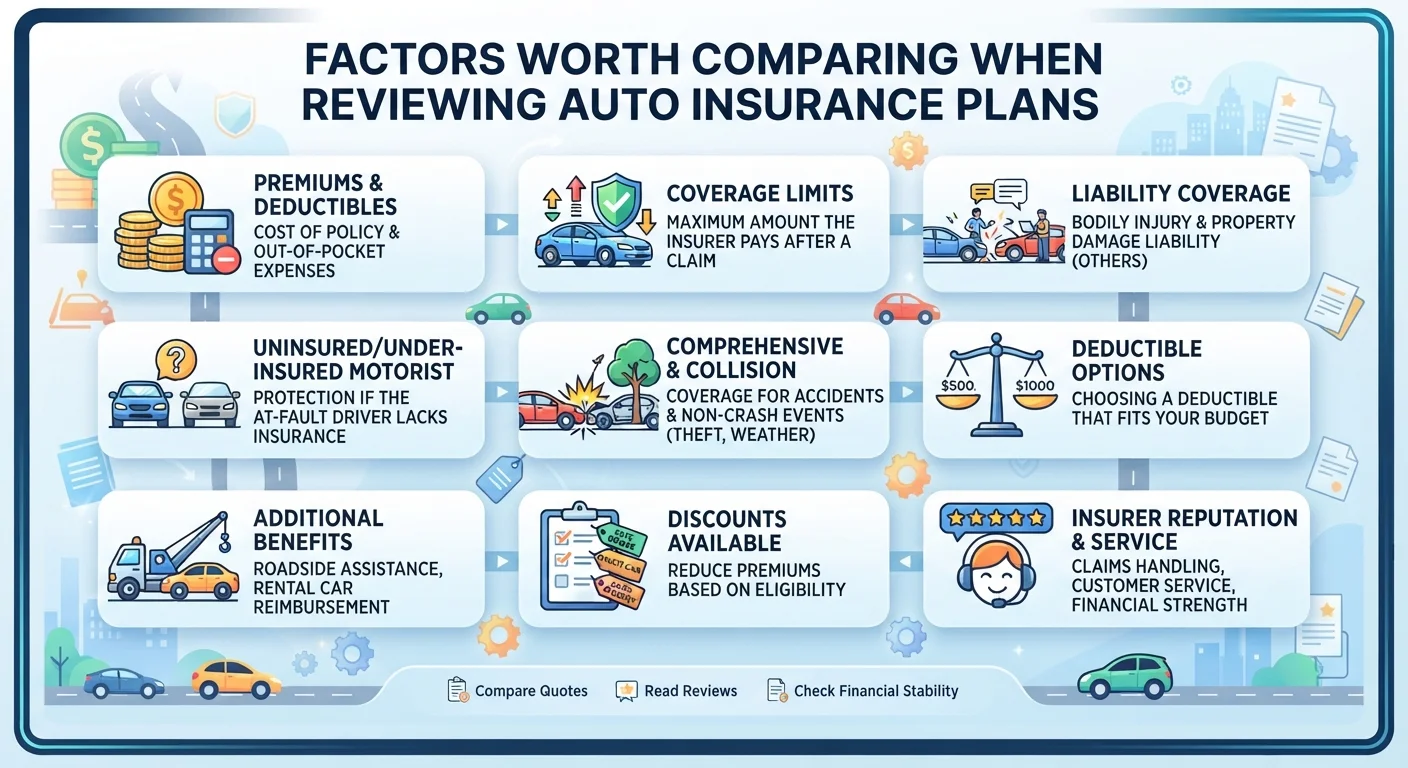
When a major change occurs, contact your insurer or a licensed agent before assuming your current policy still covers you adequately. Ask specifically whether your existing limits, deductibles, and coverage types still fit the new situation. If you are comparing plans from scratch, factors worth comparing when reviewing auto insurance plans walks through what to look at beyond just the premium price.
It also helps to go in with a list of questions ready. Questions to ask before settling on an auto insurance plan gives you a checklist to use before committing to any policy. If your household situation has changed and you share a home with others, bundling home and auto insurance may be worth exploring, though it is not the right fit for everyone.