
How Original Medicare creates out-of-pocket exposure
Original Medicare covers a substantial share of hospital and medical expenses, but it does not cover everything. Part A, which covers inpatient hospital stays, has a per-benefit-period deductible. Part B, which covers outpatient and physician services, has an annual deductible plus a 20% coinsurance requirement with no out-of-pocket maximum. That 20% can add up quickly if you face a serious illness or ongoing treatment.
Because Original Medicare has no cap on what you might owe in a given year, some beneficiaries face unpredictable costs. Medigap policies exist to limit that exposure. To understand the full structure of your options, our overview of Original Medicare vs. Medicare Advantage covers how each approach handles cost-sharing differently.
What Medigap covers and how plans are structured
The Centers for Medicare and Medicaid Services (CMS) standardizes Medigap plans. Insurers sell them using letter designations: Plan A, Plan B, Plan C, Plan D, Plan F, Plan G, Plan K, Plan L, Plan M, and Plan N. Every insurer offering Plan G, for example, must provide the same core benefits for that plan. The main difference between insurers for the same plan letter is the premium they charge.
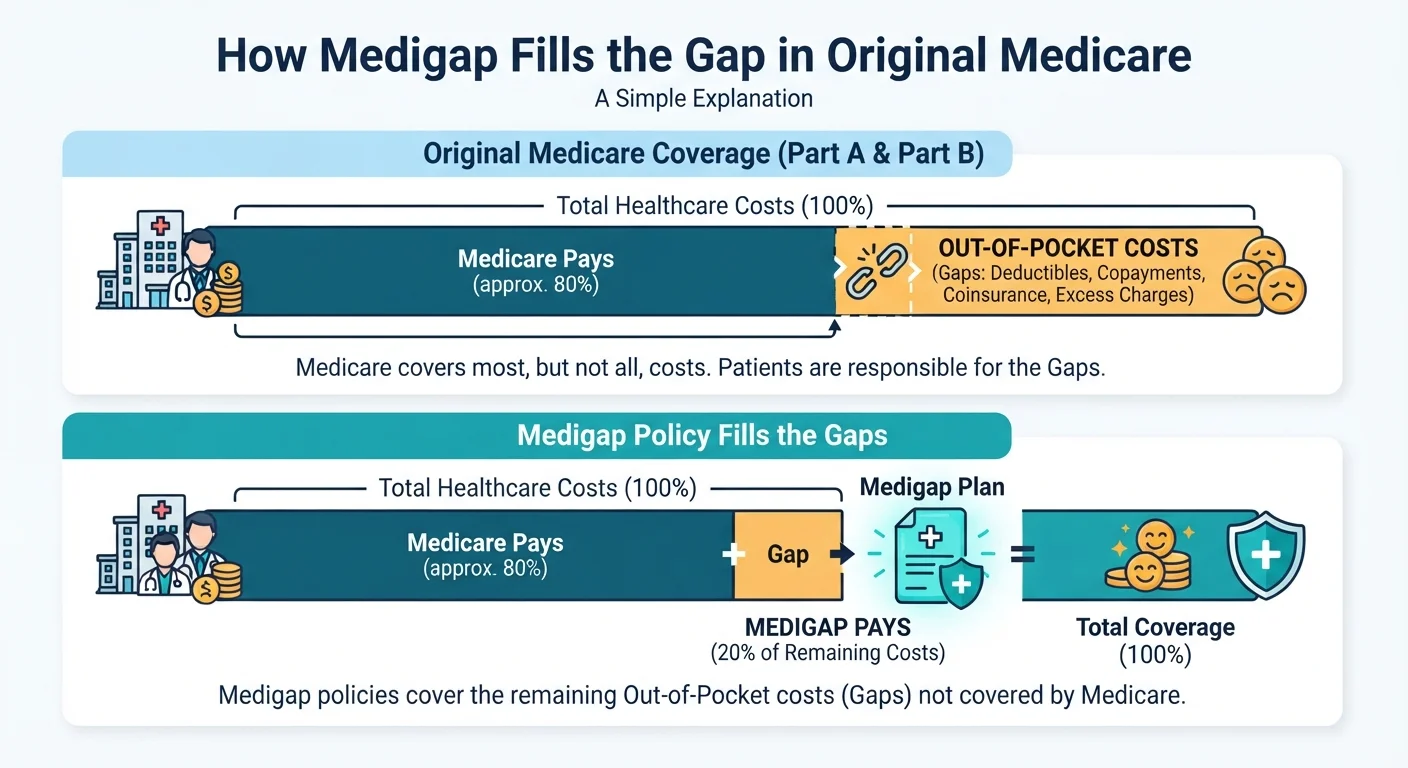
Coverage across plan types varies. Plan A is the baseline and covers Part A coinsurance and hospital costs up to an additional 365 days after Medicare benefits are exhausted, Part B coinsurance or copayments, the first three pints of blood, and Part A hospice care coinsurance. Plans with broader coverage (such as Plan G or Plan N) add benefits like the Part A deductible, Part B excess charges, or limited foreign travel emergency coverage (typically 80% after a deductible, up to a lifetime limit).
Plans C and F, which covered the Part B deductible, are no longer available to people who became eligible for Medicare on or after January 1, 2020. Beneficiaries who were eligible before that date may still hold or purchase those plans.
~14 million
Americans with Medigap coverage
According to CMS data, approximately 14 million Medicare beneficiaries were enrolled in a Medigap policy as of recent years.
20%
Part B coinsurance with no cap
Original Medicare Part B requires beneficiaries to pay 20% of covered outpatient costs with no out-of-pocket maximum, per CMS program rules.
10 plan types
Standardized Medigap plan letters
CMS currently standardizes 10 Medigap plan letters available in most states, with Massachusetts, Minnesota, and Wisconsin using their own standardized formats.
When and how to enroll
Your Medigap Open Enrollment Period is the six-month window starting the month you turn 65 and are enrolled in Medicare Part B. Federal law gives you guaranteed issue rights during this window: insurers cannot deny you coverage, charge you more based on health status, or impose a waiting period for pre-existing conditions (with narrow exceptions).
Outside this window, most states allow insurers to use medical underwriting. That means your health history can affect whether you are offered a policy and at what price. Some states have additional protections, so checking your state's insurance department rules is worthwhile. Veterans with dual coverage should also review how their benefits interact; our article on VA benefits and Medicare addresses that coordination directly.
If you are new to Medicare and uncertain about common enrollment pitfalls, the Medicare misconceptions that trip up new enrollees article covers frequent misunderstandings that lead to gaps or penalties.
This article is for general informational purposes only and is not personalized insurance, financial, or medical advice. Coverage terms, eligibility rules, and costs vary by insurer, plan, and state. Consult a licensed insurance agent or the official Medicare program resources to evaluate your specific situation.