Why plan selection is different when you have ongoing medical needs
For someone who rarely sees a doctor, a low-premium plan with a high deductible may work fine. For someone managing a chronic condition, taking regular medications, or seeing specialists frequently, the same plan could cost significantly more over a year. The monthly premium is only part of the picture.
People with ongoing medical needs typically reach their deductible sooner and use more covered services, which means every cost-sharing detail matters. If you are new to evaluating health coverage independently, the plain-English starting point for first-time enrollees covers the core concepts worth understanding before comparing plans.
This article provides general health insurance education and is not personalized medical or financial advice. Consult a licensed insurance agent or healthcare professional for guidance specific to your situation.
Practices for evaluating a plan with ongoing medical needs
The following practices apply whether you are comparing employer-sponsored plans, Marketplace options, or Medicare coverage. Each addresses a specific area where people with chronic conditions or regular prescriptions face higher financial risk.
Check the plan's out-of-pocket maximum before comparing premiums
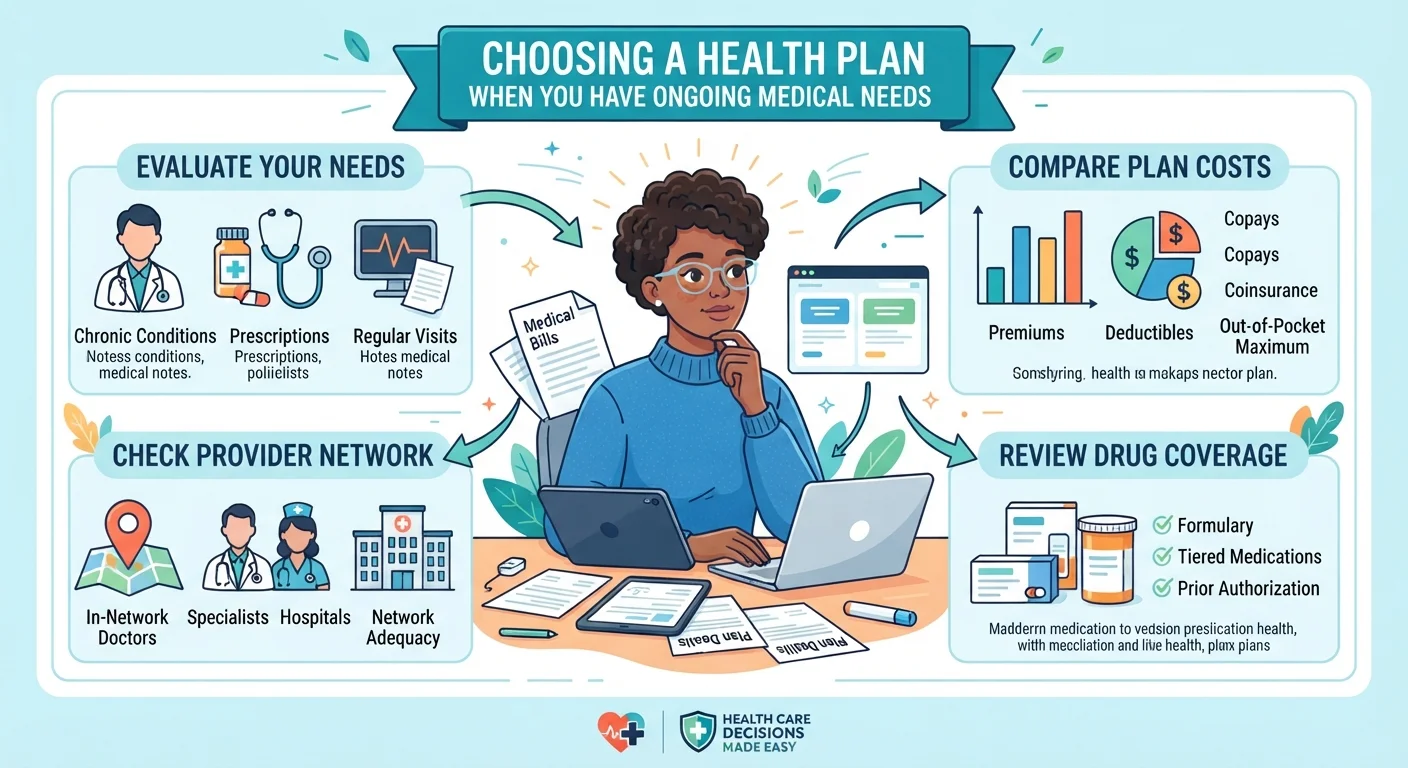
People with chronic conditions often reach their deductible and accumulate significant cost-sharing within a single plan year. A lower out-of-pocket maximum protects against worst-case spending, even if the monthly premium is higher. Focusing only on premium costs can produce an inaccurate estimate of total annual spending.
Verify every current medication against each plan's formulary before enrolling
Formulary tiers directly affect prescription costs, and tier placement varies between plans even for the same medication. A drug covered at tier 2 under one plan may be tier 4 under another, with substantially different copays. Prior authorization requirements can also delay access to ongoing medications.
Confirm that current specialists and hospitals are in-network under each plan
Switching to a plan where your specialist is out-of-network can trigger significantly higher cost-sharing or require finding a new provider entirely. Provider networks change annually, and a plan that covered your specialist last year may not do so after renewal. Checking network status directly with the insurer or provider avoids surprises after enrollment.
Calculate estimated total annual costs across multiple realistic scenarios
A single-number comparison of premiums misses how cost-sharing interacts with actual utilization. Estimating costs under a low-use scenario and a high-use scenario for each plan reveals the range of financial exposure. This method accounts for deductibles, copays, and the out-of-pocket maximum together.
Review the summary of benefits and coverage document for each plan, not just the plan brochure
Marketing materials summarize plan features selectively. The standardized Summary of Benefits and Coverage (SBC) document, required under federal law, lays out deductibles, copays, coinsurance, and covered services in a consistent format that makes comparison more straightforward. Coverage limitations and exclusions also appear there.
Understanding formularies and drug costs
Prescription drug coverage is frequently where people with ongoing medical needs face the largest cost differences between plans. Every plan that includes drug coverage uses a formulary, which is a list of covered medications grouped into tiers. Higher tiers generally mean higher cost-sharing for the enrollee.

Before comparing premiums, list every medication you take and check its tier placement in each plan's formulary. A plan with a lower premium may place a medication you take daily in a higher tier, resulting in greater total spending. Some plans also require prior authorization or step therapy, meaning the insurer must approve coverage before filling certain prescriptions.
For Medicare enrollees, the timing of Medicare enrollment also affects which drug coverage options are available to you and at what cost.
Network access and specialist care
If you see a specialist regularly, confirming that the specialist participates in a plan's network before enrolling matters. Out-of-network costs can be substantial, and some plan types restrict specialist access more than others.
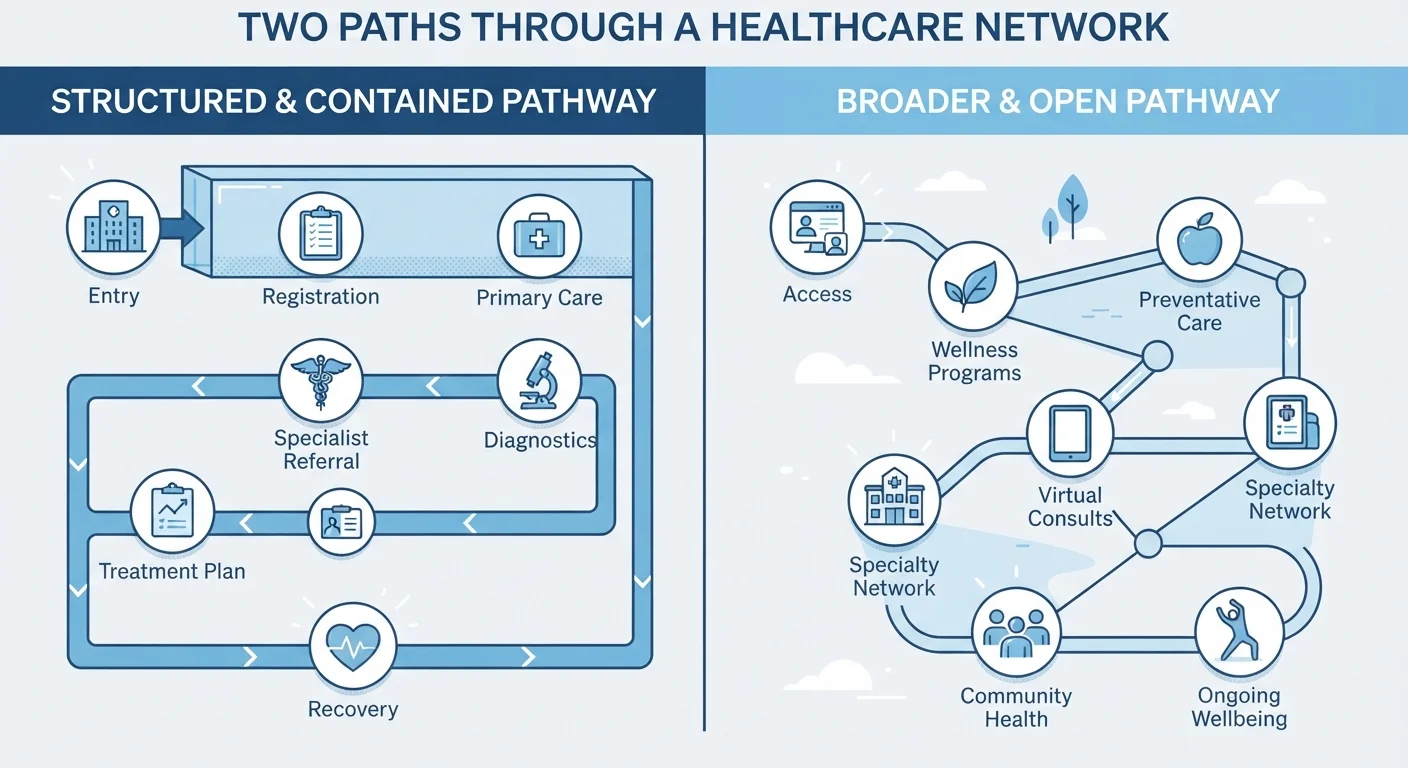
HMO plans generally require a referral from a primary care physician to see a specialist, while PPO plans typically allow direct access. The differences between HMO and PPO network rules affect both cost and convenience for anyone who needs frequent specialist visits. Networks also change year to year, so a provider who was in-network last year may not be covered under the same plan this year.
When preparing for open enrollment, the open enrollment preparation checklist includes steps for verifying provider network status before a decision is final.
Out-of-pocket maximums and cost-sharing structures
The out-of-pocket maximum is the total amount you will pay in a plan year before the insurer covers 100 percent of in-network costs. For someone with high utilization, this ceiling is often the most financially protective number in a plan's design.
Comparing out-of-pocket maximums across plans, alongside deductibles and copay structures, gives a clearer picture of worst-case annual spending. A plan with a lower out-of-pocket maximum may cost more per month but limit total exposure if you need frequent care.
People enrolled in high-deductible health plans may also be eligible to contribute to a Health Savings Account, which allows pre-tax dollars to be set aside for qualified medical expenses. The basics of HSA eligibility and how funds work explains who qualifies and what expenses the accounts cover.
Some plans also include wellness and preventive benefits that many enrollees do not use. The wellness benefits often overlooked in health plans covers what is commonly available and how to find it in your plan documents.