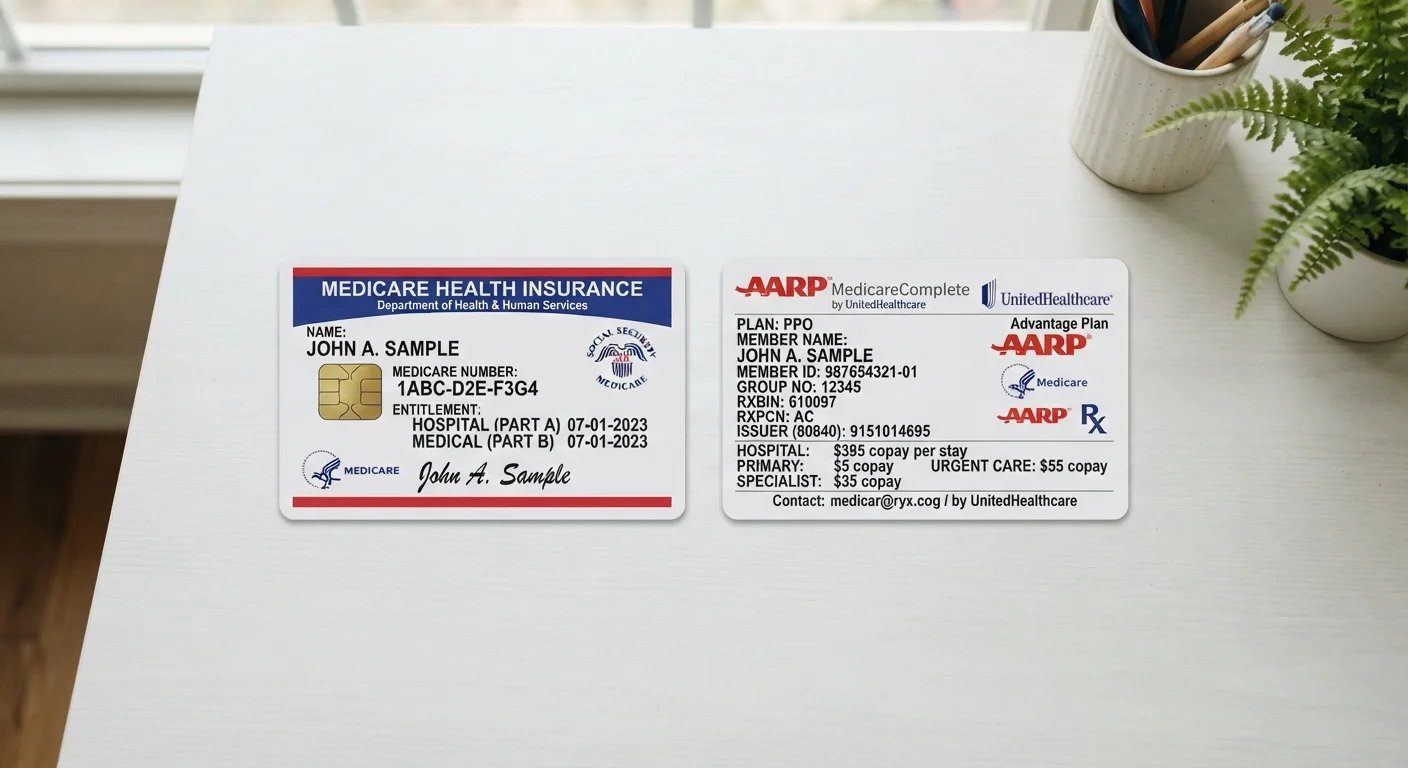

Two programs, two separate systems
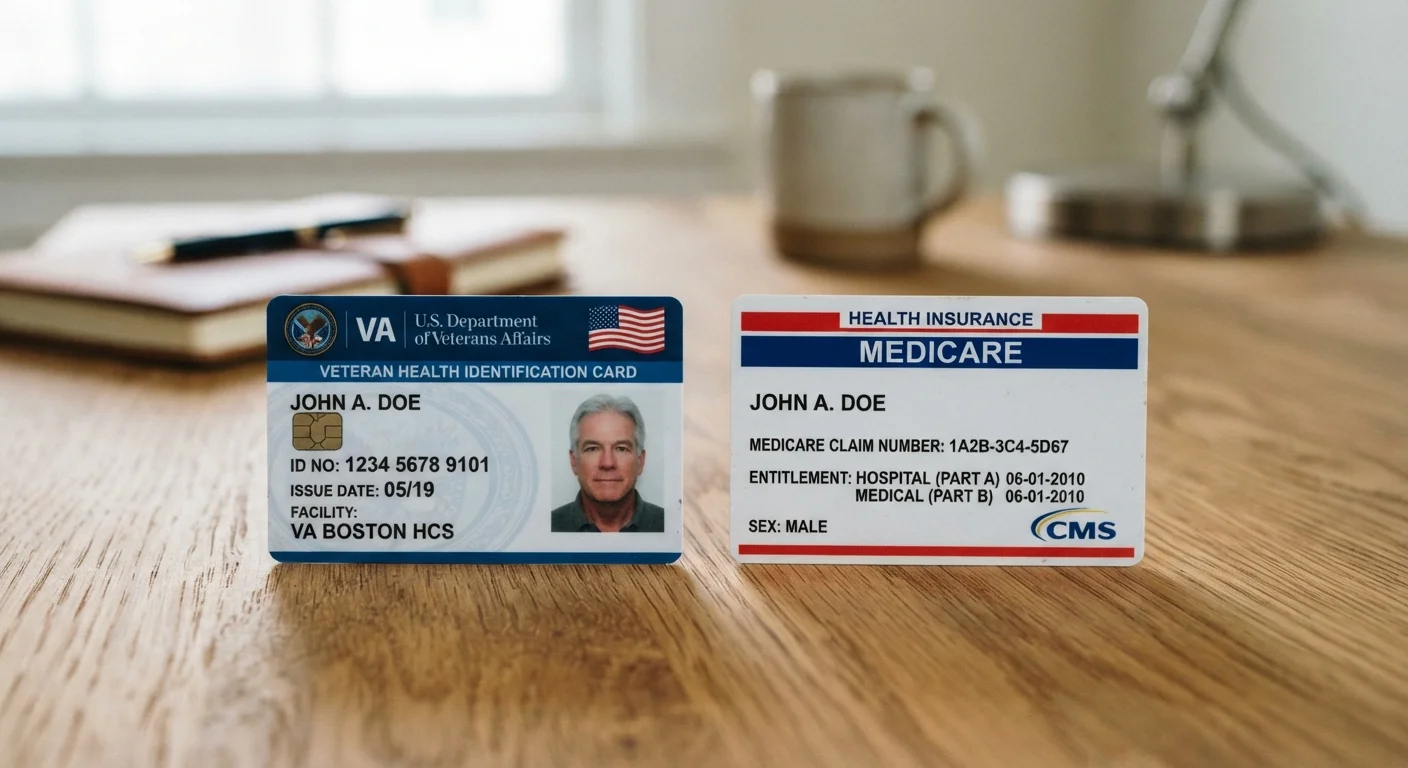
Veterans who retire with VA health benefits and who also qualify for Medicare hold two federal programs at once. Many assume these automatically work together, the way a primary and secondary insurer do in commercial coverage. They do not.
The VA runs its own hospitals, clinics, and pharmacy network. Medicare covers care at participating hospitals, physicians' offices, and outpatient facilities outside the VA system. When a veteran receives care inside a VA facility, Medicare has no role. When that same veteran visits a Medicare-participating provider outside the VA, the VA has no role. The programs run in parallel, not in tandem.
This distinction matters most in emergencies. A veteran taken by ambulance to a non-VA hospital needs Medicare, not VA coverage, to avoid paying the full bill. Veterans who enrolled in VA care but skipped Medicare Part B because they felt adequately covered can find themselves in a costly gap when that situation arises.
For a broader look at how Medicare is structured, understanding the difference between Original Medicare and Medicare Advantage is a useful starting point.
Medicare enrollment and the Part B decision
Most Americans become eligible for Medicare at age 65. For veterans who are still enrolled in VA health care at that point, the Part B enrollment decision often feels optional. The VA encourages enrollment anyway.
Part A (hospital insurance) is premium-free for most people who paid Medicare taxes long enough, so there is little reason to delay it. Part B (outpatient and physician coverage) carries a monthly premium, which leads some veterans to skip it. The risk is that if VA coverage changes, the veteran misses the standard enrollment window, and a late-enrollment penalty applies permanently to the Part B premium.
Veterans who receive care through the VA for service-connected conditions and want Medicare as a backup for everything else will generally want Part B in place from the start. Those who are still working past 65 and covered by an employer group health plan have a special enrollment period after that coverage ends, which is worth verifying with the Social Security Administration directly.
Enroll in Part B on time, even with VA coverage
The VA recommends enrolling in Medicare Part B when first eligible at 65, regardless of current VA enrollment status. VA access can change due to eligibility rules, distance, or other factors. Having Part B in place from the start avoids permanent late-enrollment penalties and covers care at non-VA facilities.
Common Medicare myths around enrollment timing can lead to lasting financial consequences. Reading through them before the 65th birthday can prevent avoidable penalties.
Prescription drug coverage: VA formulary vs. Medicare Part D
Veterans enrolled in VA health care receive prescription drugs through the VA pharmacy system at low or no cost, depending on their disability rating and income. This coverage is separate from Medicare Part D, the prescription drug benefit available through Medicare.
Because VA drug coverage is considered creditable (at least as good as Part D in most cases), veterans with VA pharmacy access do not face a late-enrollment penalty if they choose to add Part D later, provided their VA coverage remained continuous. Still, circumstances change. If a veteran loses VA eligibility or relocates far from a VA pharmacy, having Part D already in place avoids a gap.
Veterans should not assume VA coverage will always be available or convenient. Confirming the current status of VA enrollment, and keeping documentation of that coverage, gives more flexibility down the road.
Service-connected conditions and VA priority groups
The VA assigns enrolled veterans to priority groups based on disability ratings, income, and other factors. Veterans with higher disability ratings, particularly those rated 50% or above for service-connected conditions, generally receive care with no copays. Lower-rated veterans and those without service-connected conditions may pay copays that vary by the type of care.
Medicare cost-sharing follows a different structure entirely, with deductibles, coinsurance, and out-of-pocket limits set by the program. Veterans using both systems may find that their VA copays are lower for service-connected care, while Medicare provides broader access to specialists and facilities outside the VA network.
Medigap policies can help cover the cost-sharing that Original Medicare leaves behind, which is worth considering for veterans who use Medicare frequently for care outside the VA. Social Security retirement benefits interact with Medicare eligibility timing in ways worth reviewing before claiming.
This article is for general informational purposes only and is not a substitute for personalized advice from a licensed insurance counselor, VA benefits specialist, or qualified financial adviser. Coverage rules, costs, and eligibility can change. Veterans should verify current details with the VA, Medicare, or a Veterans Service Organization.