
Why health insurance works the way it does
Health insurance is a financial arrangement, not a spending account. You and many other people pay into a shared pool each month. That pool pays out when any member has a medical expense. The monthly payment is called a premium, and you owe it whether or not you use any care that month.
The reason this structure exists is predictability. A broken arm, an emergency appendectomy, or a cancer diagnosis can each generate tens of thousands of dollars in bills within days. No individual can reliably predict or budget for those costs, so insurance distributes the risk across a large group. The insurer collects premiums, negotiates rates with providers, and pays claims according to the terms of the policy.
Understanding this pooled-risk model helps explain why plans have rules about networks, preauthorization, and covered services. Those rules exist to manage the total cost across all members, not just yours.
This article is general information
The content here describes how health insurance works in general terms and is not personalized insurance or financial advice. Plan details, costs, and eligibility rules vary by insurer, state, and individual circumstances. Consult a licensed insurance agent or broker for guidance specific to your situation.
The cost pieces you will actually pay
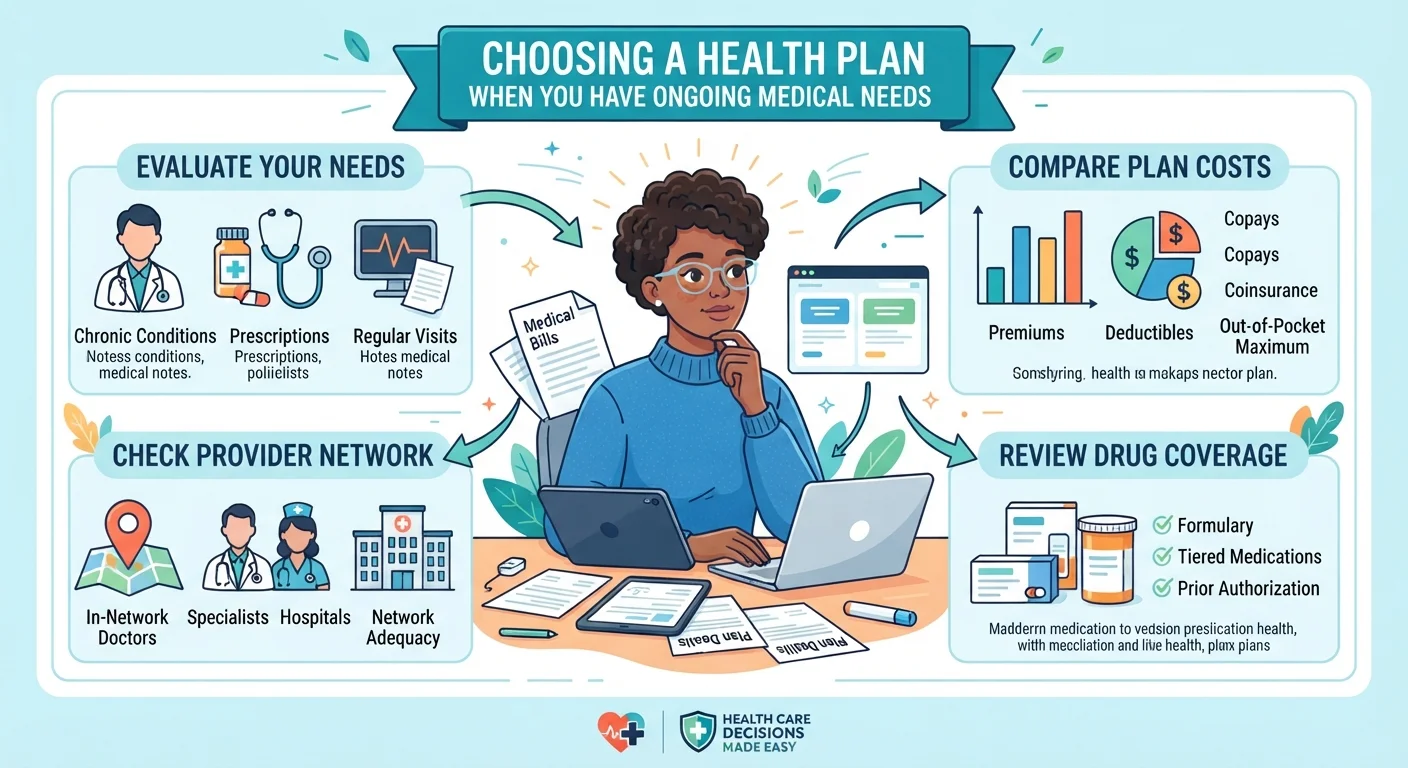
Your monthly premium is only part of what health insurance costs. Most plans include several other cost-sharing elements that apply when you actually receive care.
Premium
The fixed monthly amount you pay to maintain your health insurance coverage, regardless of whether you use any medical services.
Deductible
The amount you pay out of pocket for covered services before your insurance begins sharing costs. For example, with a $1,500 deductible, you pay the first $1,500 in covered expenses each plan year.
Copay
A set dollar amount you pay for a specific service, such as $25 for a primary care visit, usually at the time of the appointment.
Network
The group of healthcare providers that have agreements with your insurer. Staying in-network costs less; going out of network typically costs more or may not be covered.
Out-of-pocket maximum
The most you will pay in a plan year for covered services. After you reach this limit, the insurer covers 100 percent of covered costs for the rest of the year.
Special Enrollment Period
A window outside of regular open enrollment when you can sign up for or change a health plan, triggered by qualifying life events such as losing other coverage or getting married.
The deductible resets every plan year. Until you reach it, you typically pay the full contracted rate for services (which is lower than the retail price because the insurer has negotiated it). After the deductible, you usually share costs with the insurer through coinsurance, where you pay a percentage such as 20 percent and the insurer pays the rest. Copays are flat fees for specific visits and may apply before or after the deductible depending on the plan.
For a deeper look at how these pieces interact, see how deductibles, copays, and out-of-pocket maximums work.
Common plan types explained
Most individual and employer-sponsored plans fall into one of four categories. The differences are mainly about network flexibility and the steps required to see a specialist.
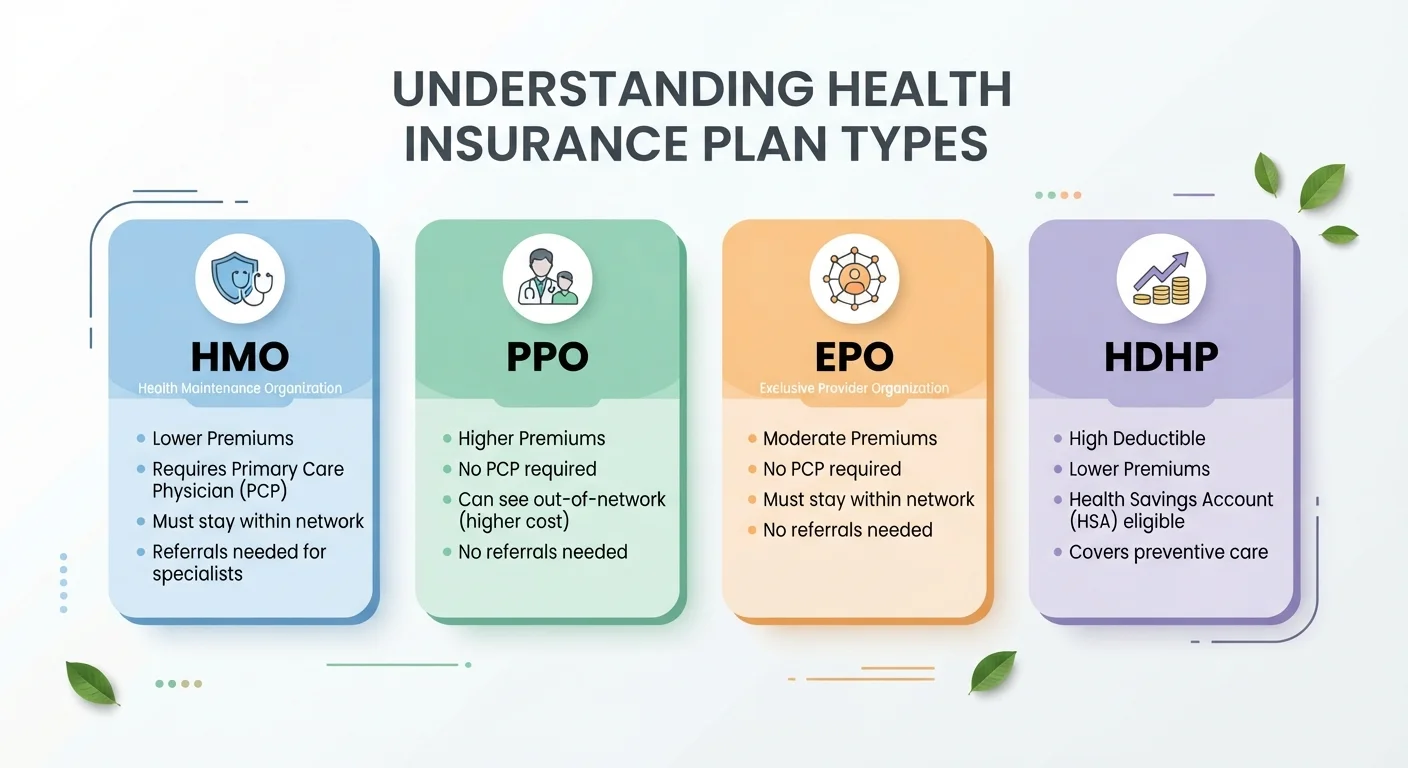
- An HMO (Health Maintenance Organization) requires you to select a primary care physician who coordinates your care. Referrals are needed to see specialists, and coverage is generally limited to in-network providers.
- A PPO (Preferred Provider Organization) gives you more freedom to see specialists without referrals and provides some coverage for out-of-network care, usually at a higher cost-sharing level.
- An EPO (Exclusive Provider Organization) is a middle ground: no referrals required, but out-of-network care is not covered except in emergencies.
- An HDHP (High-Deductible Health Plan) has a higher deductible and lower premium. It is the only plan type eligible to be paired with a Health Savings Account (HSA), a tax-advantaged account for medical expenses.
If you have ongoing medical needs, plan type matters beyond just cost. Choosing a health plan when you have ongoing medical needs covers which features matter most in those circumstances.
Check what your doctors accept first
Before finalizing any plan, confirm that your current primary care doctor and any specialists you see regularly are in that plan's network. Switching networks mid-year can mean paying out-of-pocket rates for providers you already rely on.
Where first-time enrollees get coverage
The coverage source available to you depends on your age, employment status, and income.
Employer-sponsored coverage is the most common source for working-age adults. When you start a job with benefits, you typically have a window of 30 to 60 days to enroll. Missing that window means waiting for the next open enrollment period unless you have a qualifying event.
Federal and state marketplaces serve people who do not have employer coverage. Plans sold on the marketplace are standardized into metal tiers (Bronze, Silver, Gold, Platinum) based on how costs are split between you and the insurer. Depending on household income, you may qualify for subsidies that reduce your monthly premium; eligibility and amounts are calculated through HealthCare.gov or your state's marketplace.
Medicaid covers people with low incomes and meets specific federal eligibility criteria. Eligibility thresholds vary by state.
Medicare covers adults 65 and older, as well as some people under 65 with qualifying disabilities. If you are approaching retirement age and also reviewing your broader financial picture, Social Security retirement benefits for new claimants may be a useful companion read.
What to think about before you choose
Comparing plans means weighing premium against expected out-of-pocket costs, not just picking the lowest monthly payment. A plan with a low premium often has a high deductible, which can cost more overall if you use care regularly.
A few concrete questions to work through before choosing:
- Are your current doctors and any specialists in the plan's network?
- Are your regular prescriptions on the plan's drug formulary, and at what tier?
- What is the out-of-pocket maximum, and could you cover it if needed?
- Does the plan require referrals for specialty care?
When you are ready to move through the full enrollment process, the open enrollment preparation checklist walks through the documents and decisions to have ready before the window closes.
This article is for general informational and educational purposes only and is not insurance, financial, or medical advice. Coverage terms, costs, and eligibility rules vary by plan and state. Consult a licensed insurance professional for guidance specific to your situation.