How each plan controls your access to care
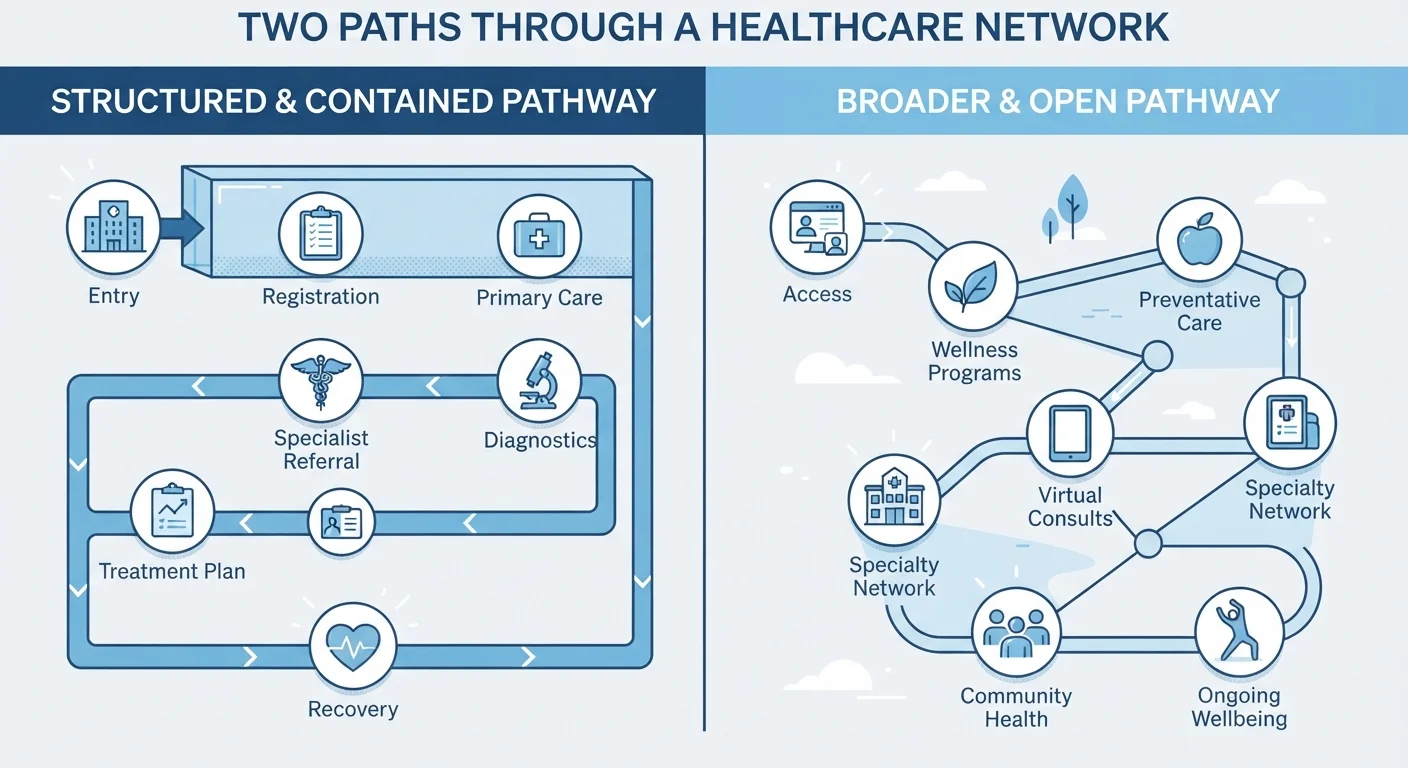
The most practical difference between an HMO and a PPO is not the premium or the deductible. It is how each plan decides who you can see and under what conditions.
An HMO (Health Maintenance Organization) assigns you to a primary care physician (PCP), a doctor who acts as your main point of contact for all medical needs. If you need to see a cardiologist or a dermatologist, your PCP must first issue a referral. Without that referral, the plan generally will not cover the specialist visit. The network is also closed: providers outside the HMO's contracted list are not covered except in a documented emergency.
A PPO (Preferred Provider Organization) does not require a PCP or referrals. You can schedule an appointment with a specialist directly, and you can go outside the plan's preferred network, though you will pay more when you do. The plan still has a network of preferred providers at lower cost-sharing rates, but the out-of-network benefit exists rather than being absent entirely.
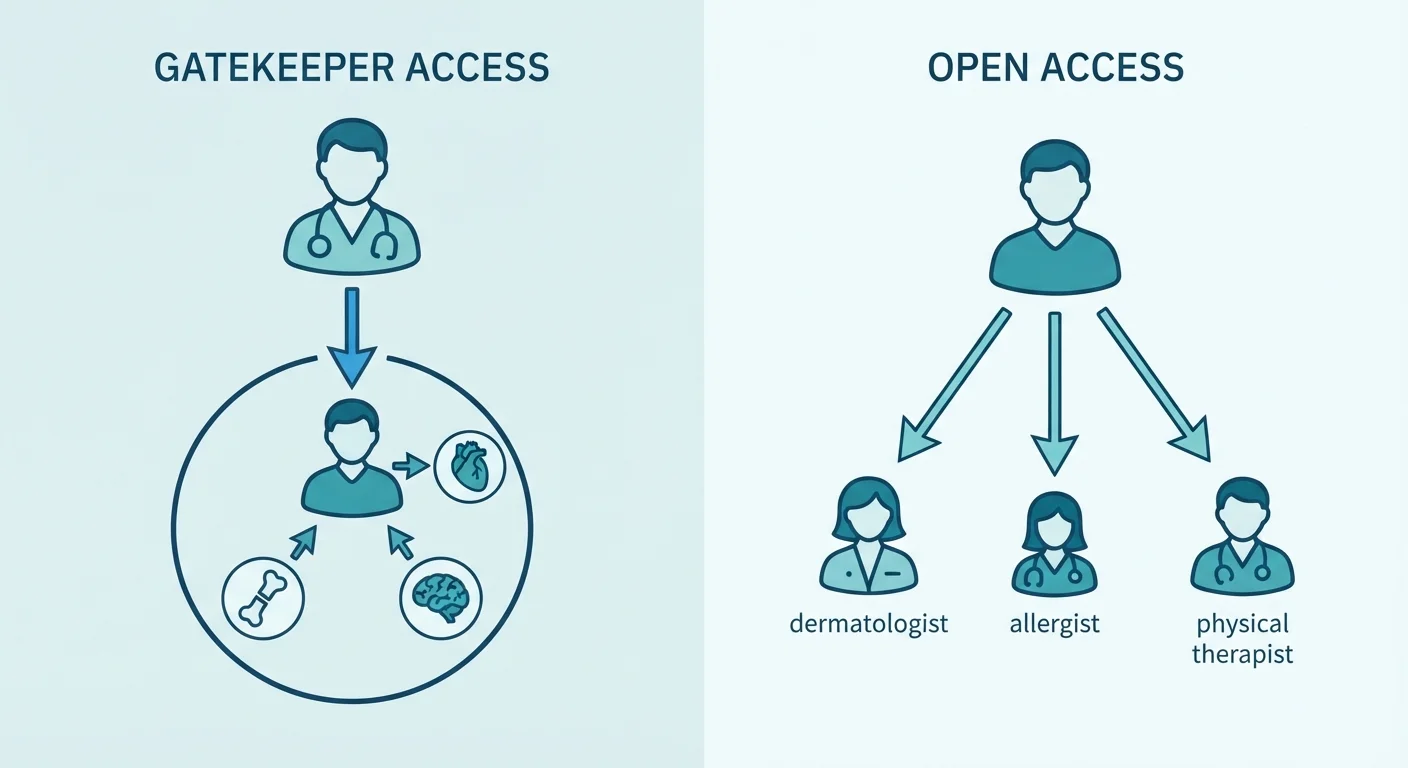
This structural difference shapes everything downstream: which doctors you can see, how quickly you can reach a specialist, and what happens when you receive care while traveling.
Cost differences: premiums, copays, and out-of-network exposure
HMOs tend to carry lower monthly premiums and lower copays for in-network care. The trade-off is a narrower provider network and no coverage for out-of-network services (except emergencies). If you see a provider outside the HMO network without prior authorization, you are responsible for the full cost of that visit.
PPOs charge higher premiums and often have higher deductibles, but they include an out-of-network benefit. When you use a non-preferred provider, the plan still pays a share, typically at a lower coinsurance rate than in-network care. That gap can still be substantial, so it is worth reading the plan's explanation of out-of-network cost-sharing before enrolling.
For a fuller picture of how deductibles, copays, and out-of-pocket maximums work across both plan types, see how health insurance cost terms actually work.
| Criterion | HMO | PPO |
|---|---|---|
| Primary care physician required | Yes, must choose a PCP | No, optional |
| Referrals to see specialists | Required from PCP | Not required |
| Out-of-network coverage | Emergency only | Yes, at higher cost-sharing |
| Monthly premiums | Generally lower | Generally higher |
| Network size | Narrower, defined network | Broader, preferred plus out-of-network |
| Care coordination | Managed through PCP | Patient-directed |
| Flexibility while traveling | Limited to emergencies | Out-of-network benefit applies |
Referrals and specialist access in practice
The referral requirement under an HMO is not purely administrative. It reflects a care coordination model: the PCP tracks your full medical picture and routes you to the appropriate specialist. For many people with stable, routine needs, this works smoothly. For people who already know they need a specific type of specialist, or who need to see several at once, the added step introduces delay and friction.
PPO members can call a specialist's office directly, which can matter when time is a factor. The flexibility also applies across state lines, which is relevant for retirees who spend time in more than one location. If you are comparing Medicare Advantage plan options, which often come in both HMO and PPO forms, this network portability difference is worth examining closely. How Original Medicare and Medicare Advantage are structured differently covers network rules for those plans in more detail.
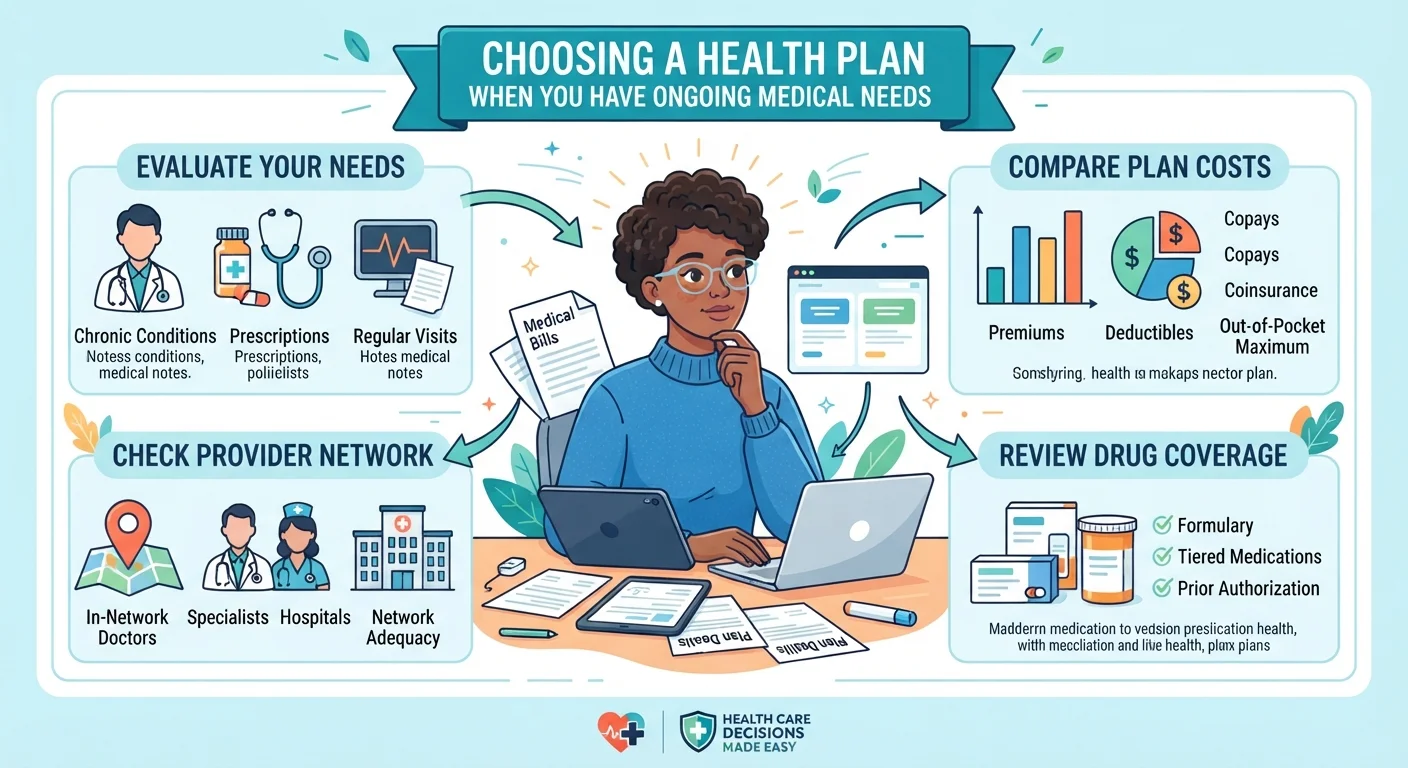
People managing chronic conditions or seeing multiple specialists regularly may find the PPO's direct access worth the higher premium cost. Choosing a health plan when you have ongoing medical needs walks through what to weigh in that situation.
Which plan type fits your situation
There is no universal answer. The right plan depends on how you actually use care, where your preferred providers fall in relation to each plan's network, and what your budget allows.
An HMO can work well if you have a primary care doctor you trust, you see specialists infrequently, and in-network providers are accessible where you live. A PPO is worth the higher cost if you have established relationships with out-of-network providers, need frequent specialist access, or travel often enough that out-of-network coverage matters.
Before open enrollment closes, verify that your current doctors participate in any plan you are seriously considering. A plan with a lower premium that excludes your PCP or a key specialist can end up costing more than a higher-premium plan that keeps your existing care team in-network. The open enrollment preparation checklist can help you organize that review before the deadline.
If this is your first time selecting a plan, a plain-English starting point for first-time health insurance enrollees covers the core concepts that apply to both HMO and PPO decisions.
This article is for general informational purposes only and does not constitute personalized insurance, financial, or medical advice. Plan terms, networks, and costs vary by insurer, employer, and region. Consult a licensed insurance agent or broker and review actual plan documents before making coverage decisions.