
What a deductible actually means
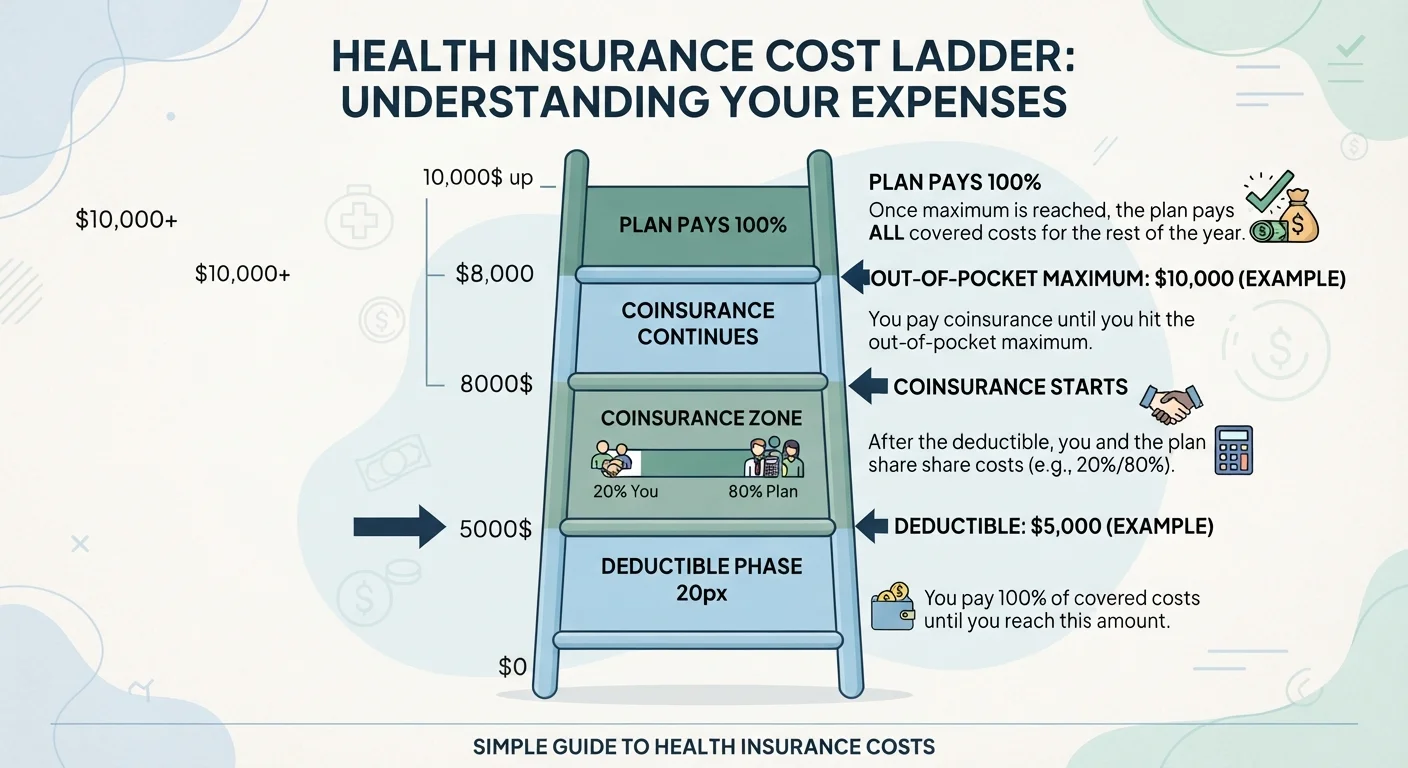
A deductible is the amount you pay for covered health care services before your insurance plan begins sharing the cost of most care. If your deductible is $1,500, you pay the first $1,500 of covered medical bills each plan year. After that point, the plan starts contributing.
Preventive services, such as annual wellness visits and certain screenings, are typically exempt from the deductible on plans that comply with the Affordable Care Act. That means the insurer covers them without requiring you to pay down the deductible first. Check your plan's Summary of Benefits and Coverage to see which services fall into that category.
High-deductible health plans (HDHPs) carry lower monthly premiums but require you to pay more before coverage kicks in. They are often paired with a Health Savings Account (HSA), a tax-advantaged account you can use to set aside money for qualified medical expenses. CMS publishes the minimum deductible thresholds that qualify a plan as an HDHP each year.
Copays and coinsurance: two ways to split a bill
Once you have met your deductible, most plans use copays, coinsurance, or both to share ongoing costs with you.
A copay is a flat fee you pay at the time of a visit or service. Common examples include $25 for a primary care appointment or $50 for a specialist. Some plans apply copays even before the deductible is met, particularly for office visits and prescriptions.
A coinsurance is your share of a bill expressed as a percentage. A plan with 20 percent coinsurance means you pay 20 percent of an in-network bill after your deductible; the insurer covers the remaining 80 percent. Because coinsurance is percentage-based, your actual dollar cost rises with the total cost of the service.
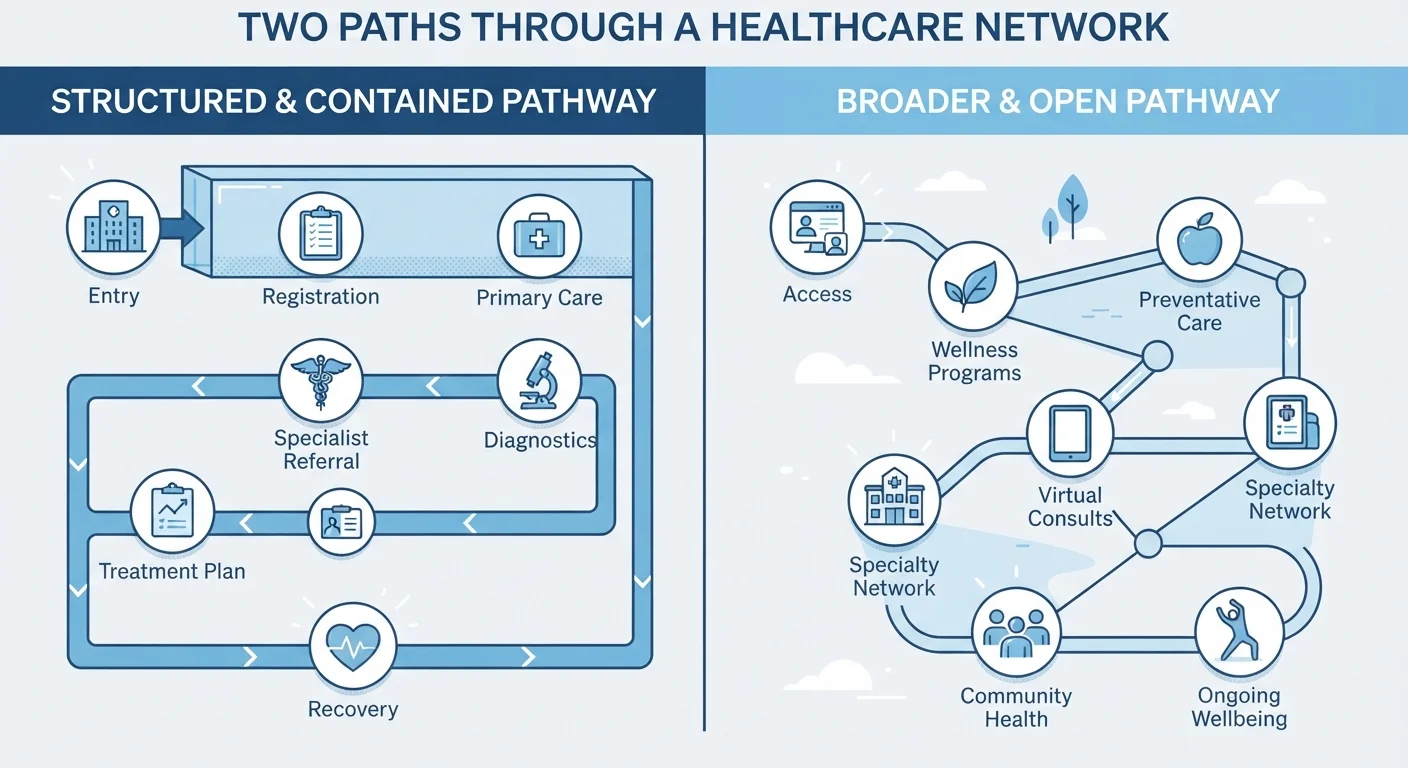
Some plans use only copays, some use only coinsurance, and many use a mix depending on the type of service. Your plan's Summary of Benefits and Coverage lists which approach applies to each category of care. If you are comparing plan types, understanding HMO and PPO network rules can help clarify how network status affects those percentages.
The out-of-pocket maximum as a financial ceiling
The out-of-pocket maximum is the most you will pay for covered, in-network services in a single plan year. It includes your deductible, copays, and coinsurance. Once that ceiling is reached, the insurer pays 100 percent of covered in-network costs for the rest of the year.
CMS sets annual limits on how high out-of-pocket maximums can be for plans sold on the Health Insurance Marketplace. For 2025, the limit is $9,450 for an individual and $18,900 for a family plan, according to CMS guidance. Plans may set lower maximums than the federal ceiling.
Family deductibles work differently
Plans with family coverage often have both an individual deductible and a family deductible. Once any one family member meets the individual deductible, the insurer starts sharing costs for that person. Once the family collectively reaches the family deductible, coverage adjusts for all remaining members. Review your plan documents to understand which threshold applies when.
Out-of-network care, services not covered by your plan, and costs above a provider's allowed amount generally do not count toward the out-of-pocket maximum. Reading your plan's exclusions section is the clearest way to understand what counts.
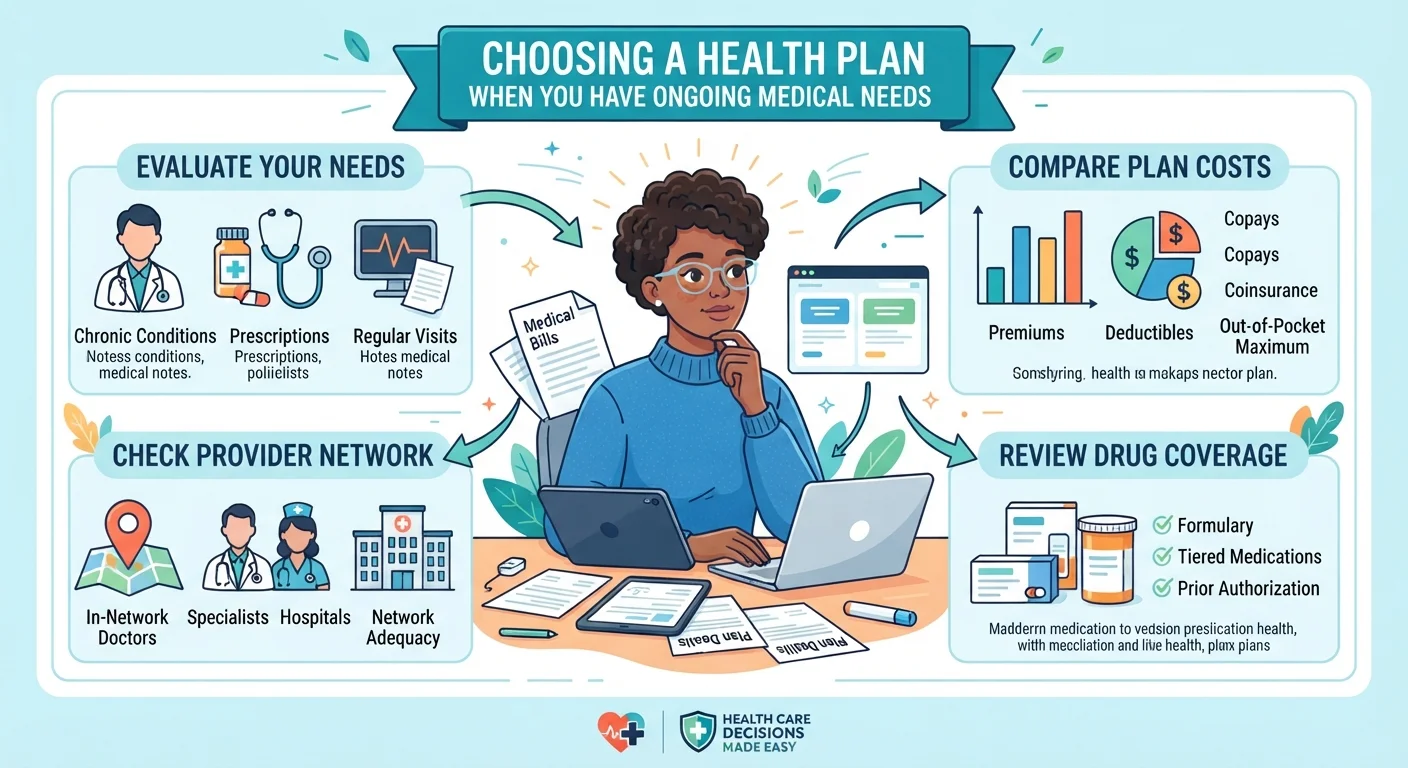
For people managing a chronic condition or taking regular prescriptions, the out-of-pocket maximum often matters as much as the premium. Choosing a plan when you have ongoing medical needs covers how to weigh these trade-offs across different plan structures.
How these terms work together
Think of cost-sharing as a sequence. You pay 100 percent of covered costs until you reach your deductible. After that, you and the insurer share costs through copays or coinsurance. When your total payments hit the out-of-pocket maximum, the insurer takes on the full cost of covered in-network care.
A plan with a $2,000 deductible and 20 percent coinsurance, with an $8,000 out-of-pocket maximum, works like this: you pay every dollar of the first $2,000. For the next $30,000 in covered bills (20 percent of which equals $6,000), you pay your 20 percent share. Once your total payments reach $8,000, the insurer covers the rest at 100 percent for the remainder of the plan year.
A lower premium plan often carries a higher deductible and out-of-pocket maximum. A higher premium plan typically has lower cost-sharing. Neither structure is uniformly better; the right fit depends on how much care you expect to use. A plain-English starting point for first-time enrollees can help if you are new to choosing your own coverage.
This article is for general informational purposes only and is not personalized financial, insurance, or medical advice. Plan terms, coverage, and cost structures vary by insurer and plan. Review your plan documents and consult a licensed insurance agent or benefits counselor for guidance specific to your situation.