

Why the tour matters more than the marketing
Brochures and websites show a facility at its best. A visit, especially an unannounced or second visit, shows you how things actually run. Families often describe the tour as the moment they either gained confidence or noticed something that made them reconsider.
Before you go, read the facility's most recent state inspection report. Every state licenses assisted living facilities and publishes inspection results; your state's department of health or aging services is the place to find them. Look at any cited deficiencies and ask the facility how those issues were addressed. Understanding what level of care is appropriate before the tour also helps you ask sharper questions once you arrive.
What to observe as soon as you walk in
Your first few minutes inside the building give you useful information before anyone says a word. Note whether common areas are clean and free of strong odors. A persistent smell of urine in hallways is a concrete sign that incontinence care may be inadequate. Cluttered corridors or wet floors without caution signs suggest maintenance gaps.
Watch resident-staff interactions you happen to see, not the ones staged for your benefit. Staff who make eye contact with residents, use their names, and speak at a normal pace rather than talking over them show a different culture than staff who move briskly past without acknowledgment.
Ask to see a resident room at the level of care being considered, not just a model unit. Check for functional call buttons, adequate lighting, secure locks, and enough space for any personal furniture the resident may want to bring.
Questions that reveal how the facility operates
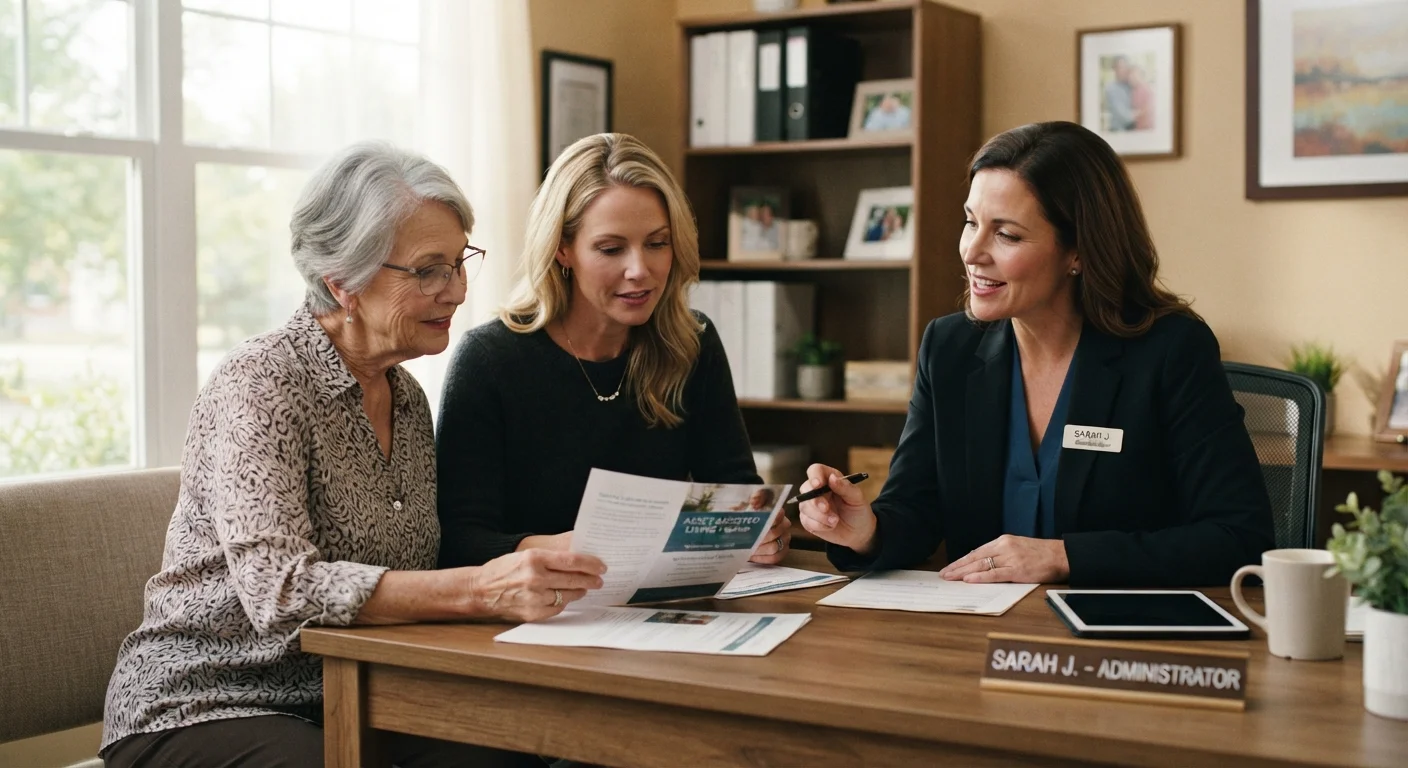
The answers to a few direct questions tell you more than a guided tour narrative. Bring a written list so nothing gets forgotten during what can be an emotional visit.
Ask about staffing ratios on the overnight shift, not just during the day
Daytime tours show peak staffing. Overnight and weekend ratios reveal whether adequate care continues when the building is less visible to families and administrators. Many quality concerns surface during those hours.
Request a written breakdown of all fees before the tour ends
Base monthly rates often exclude medication management, laundry, incontinence supplies, and transportation. Families sometimes discover the real monthly cost is substantially higher than the quoted figure after signing. Getting the full fee schedule in writing prevents that surprise.
Talk to a current resident or family member without staff present
Residents and family members who are not being monitored will give more candid feedback about responsiveness, food quality, and whether concerns are taken seriously when raised. Facilities that are confident in their care will not object to this.
Visit on a second, unannounced trip at a different time of day
First tours are prepared. A second visit at a mealtime or on a weekend morning shows the facility without staging. Staffing levels, resident engagement, and the meal service itself can look quite different from a scheduled morning tour.
Ask what happens if a resident's care needs increase
Assisted living facilities vary in the range of care they can provide. Some can accommodate significant changes in mobility or cognition; others require residents to transfer to a memory care unit or skilled nursing facility. Knowing this in advance prevents a disruptive, unplanned move later.
If you are comparing this visit to the option of adapting a current home instead, home modification resources for independent living can help you weigh both paths with concrete information.
Red flags worth taking seriously
No facility is perfect, and minor issues are not disqualifying on their own. A pattern of concerns, however, warrants caution. High staff turnover is one of the clearest warning signs: when care aides change frequently, residents lose continuity and staff learn less about individual needs over time. Ask directly what the annual turnover rate is among direct care staff.
Be cautious if the admissions coordinator avoids giving clear answers about costs or deflects questions about the inspection report. Vague answers about what triggers a move to a higher level of care also matter: you want to know under what circumstances a resident would be asked to leave, and what the process looks like.
After your visit, check whether the facility is certified by your state and whether any complaints have been filed with the state ombudsman program. The Long-Term Care Ombudsman program, administered through the federal Administration on Aging, handles complaints at the state and local level and can tell you about a facility's complaint history. A full overview of senior living arrangements can also help you understand what other options exist if concerns arise.
After the visit: making sense of what you saw
Sit down with your notes while the details are fresh. If you visited with a family member, compare your impressions separately before discussing them together, so one person's reaction does not anchor the other's memory.
If you are moving forward, ask for a copy of the resident agreement and the full fee schedule before signing anything. Review which services are included in the base rate and which are billed separately. A move-in checklist for families can help you organize the paperwork, finances, and logistics that follow once a decision is made.
This article provides general information about assisted living and is not a substitute for advice from a licensed healthcare provider, social worker, or elder law attorney. Individual circumstances, health needs, and financial situations vary. Consult qualified professionals for guidance specific to your situation.