

The four coverage areas in a standard policy
A standard homeowners insurance policy, most commonly issued as an HO-3 form, organizes protection into four distinct areas. Understanding each one separately makes the whole policy easier to evaluate.
Dwelling coverage pays to repair or rebuild the physical structure of your home if it is damaged by a covered peril such as fire, lightning, hail, or windstorm. The limit on this section should reflect the cost to rebuild your home at current construction prices, not the market value of the property.
Other structures coverage extends similar protection to detached buildings on your lot, such as a garage, fence, or shed. This coverage is usually set at 10% of your dwelling limit by default.
Personal property coverage protects your belongings, including furniture, clothing, and electronics, if they are stolen or damaged by a covered event. Most policies set this limit between 50% and 70% of the dwelling amount, but the payout method matters: actual cash value policies subtract depreciation, while replacement cost policies do not.
Liability coverage pays legal costs and damages if a guest is injured at your home or if you accidentally damage someone else's property. A standard policy commonly includes $100,000 in liability protection, though many homeowners choose to carry more.
Loss of use and additional living expenses
If a covered event makes your home temporarily uninhabitable, your policy's loss of use section (sometimes called Coverage D) pays reasonable additional living expenses. This can include hotel stays, restaurant meals above your normal grocery budget, and short-term rental costs while repairs are completed.
Coverage limits here are usually expressed as a percentage of the dwelling limit, often 20% to 30%. The insurer pays the difference between your normal living costs and the elevated costs you face during displacement, not a flat daily rate.
Loss of use does not cover all expenses
Loss of use coverage reimburses costs above your normal living expenses, not your entire hotel or food bill. If you typically spend $400 a month on groceries and your temporary living situation costs $800 a month for food, the policy generally covers the $400 difference. Keep receipts and track all additional costs carefully while you are displaced.
What a standard policy does not cover
Knowing what is excluded matters as much as knowing what is included. Most standard policies exclude floods, earthquakes, sewer backups, normal wear and tear, and damage from neglected maintenance. High-value items such as jewelry, art, or musical instruments are typically subject to sub-limits that may be well below their actual value.
Floods require a separate policy, and earthquake coverage is also sold separately or added as an endorsement in most states. For a detailed look at gaps that catch policyholders off guard, see our article on common home insurance coverage gaps.
Home warranties are a separate product entirely and cover mechanical breakdowns of appliances and systems, not damage from accidents or weather. The two are often confused. Our article on home warranty vs. home insurance explains the distinction clearly.
Reading your policy before something goes wrong
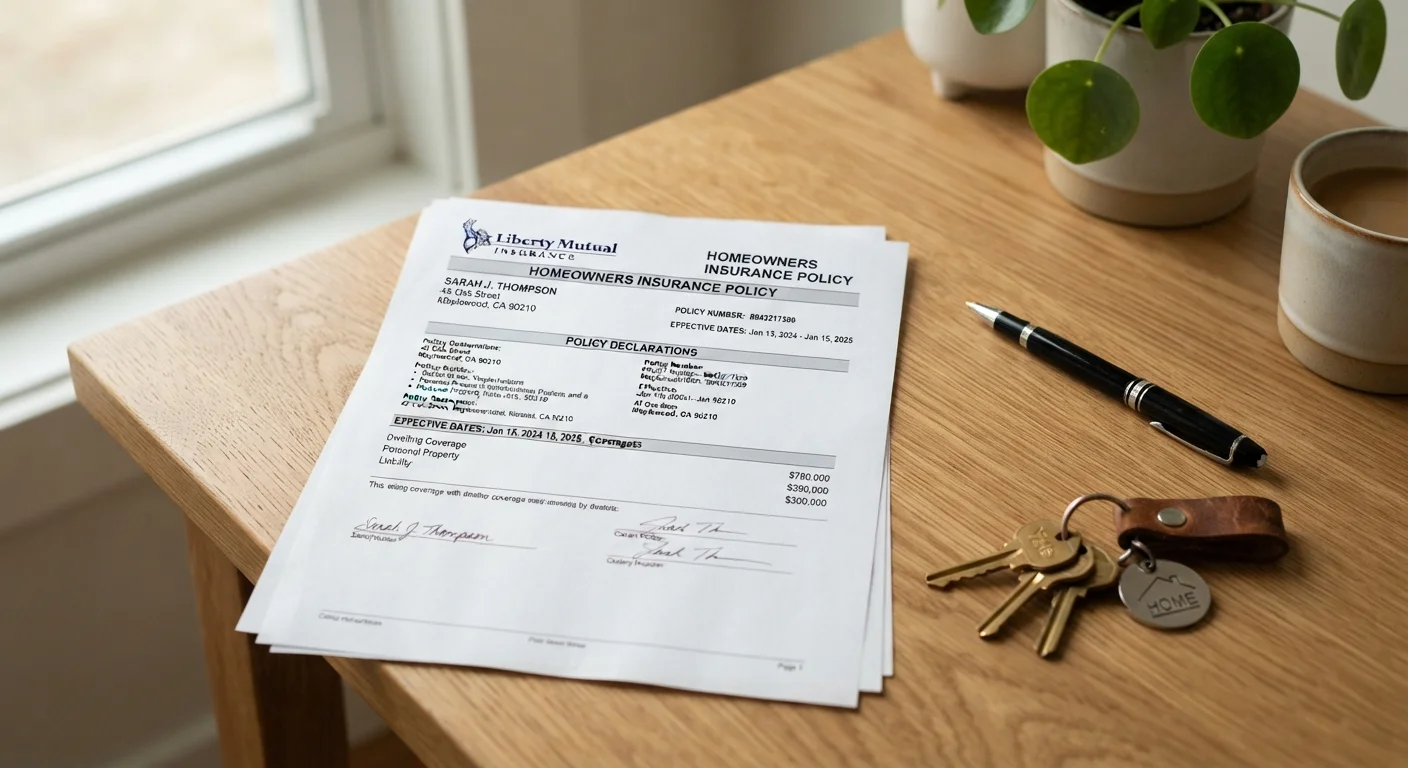
The declarations page, sometimes called the dec page, is the summary document that lists your coverage limits, deductibles, and policy period. It is the first place to look when confirming what you own and what you owe. For a section-by-section walkthrough, see our guide on reading your home insurance declarations page.
Your deductible is the amount you pay out of pocket before the insurer pays anything on a claim. A higher deductible generally lowers your premium, but it raises the amount you must cover yourself after a loss. Some policies carry a separate, higher deductible for wind and hail claims, which is worth checking if you live in a storm-prone area.
Coverage terms in home insurance share some structural similarities with other insurance types. If you are also comparing auto coverage, the article on how insurers value cars after a total loss covers similar valuation concepts in that context.
This article is for informational purposes only and does not constitute insurance, financial, or legal advice. Coverage terms, exclusions, and regulations vary by provider and state. Read your policy documents carefully and consult a licensed insurance agent for guidance on your specific situation.