


What counts as a household utility
The term "utility" covers the essential services a home needs to function: electricity, natural gas or heating fuel, water and sewer, trash collection, and internet. Some households also pay separately for phone service or a streaming bundle. Each one arrives as a monthly bill, and together they form a fixed layer of household expenses that sits below rent or mortgage payments in most budgets.
If you are setting up a new home, see the first apartment services checklist for a practical rundown of what to arrange before move-in day.
Utility
A service delivered to a home on an ongoing basis, billed monthly. Common examples include electricity, natural gas, water, sewer, trash collection, and internet.
HVAC
Heating, ventilation, and air conditioning. The systems that control temperature and air quality in a home, and often the largest driver of electricity and gas bills.
Sewer charge
A fee charged by a municipality for treating wastewater that leaves a home. It is usually billed alongside the water supply charge and based on water usage volume.
Fixed vs. variable expense
Fixed expenses stay the same each month, like a rent payment. Variable expenses change month to month; most utilities are variable because usage fluctuates with season and behavior.
Rate structure
The pricing formula a utility provider uses to calculate your bill. Some providers charge a flat rate per unit used; others use tiered pricing that charges more per unit as usage climbs.
Average cost ranges by utility type
The figures below are general national ranges drawn from U.S. Energy Information Administration data and Census Bureau surveys. Actual bills vary by home size, local rate structures, climate, and usage habits. Treat these as reference points, not guarantees.
| Average monthly electricity bill (U.S.) | Roughly $130 to $160 (U.S. Energy Information Administration) |
| Average monthly natural gas bill | Roughly $60 to $110 (U.S. Energy Information Administration) |
| Average monthly water and sewer bill | Roughly $40 to $80 (American Water Works Association research) |
| Average monthly internet cost | Roughly $50 to $90 (General market range, varies by provider and location) |
| Average monthly trash collection cost | Roughly $20 to $50 (Varies by municipality; sometimes bundled into taxes) |
| Combined average utility spend per household | Roughly $300 to $500 per month (Combined estimates; wide range reflects home size and climate) |
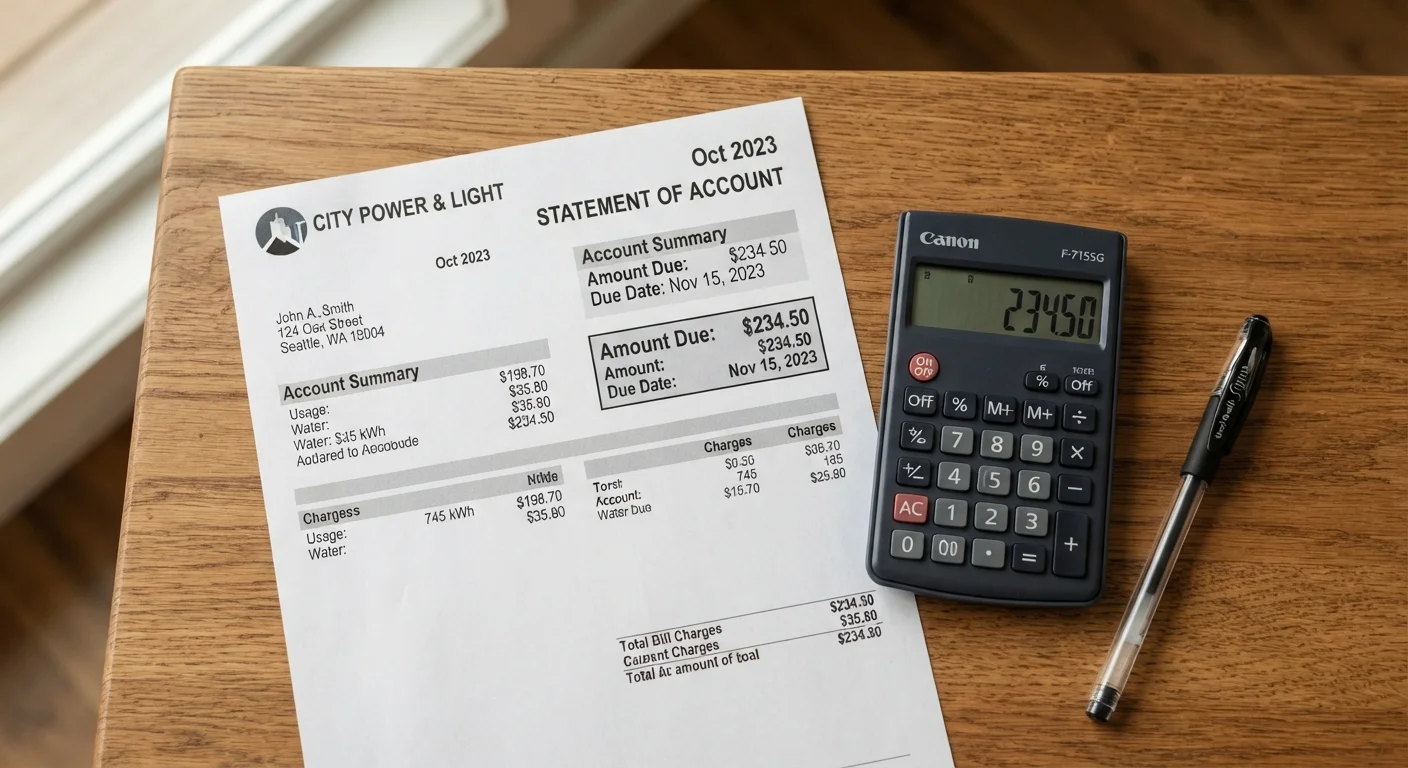
Electricity is typically the largest utility bill for households without natural gas appliances. Homes in the South and Southwest tend to pay more in summer due to air conditioning demand. Homes in the Northeast and Midwest often see higher heating bills in winter, especially those using electric resistance heat.
Natural gas costs depend heavily on whether a home uses it for heating, water heating, cooking, or all three. A home using gas only for a range will pay far less than one heating entirely with gas through a cold winter.
Water and sewer bills are usually set by local municipalities and are among the least variable utilities month to month, though irrigation in summer can push water bills noticeably higher.
How home size and climate affect totals
A studio apartment in a mild coastal city and a four-bedroom house in a cold inland state can produce utility totals that differ by several hundred dollars per month. The main drivers are square footage, insulation quality, the age of appliances and HVAC equipment, and local utility rates.
Renters in older buildings sometimes have less control over insulation or heating systems, which can mean higher bills relative to home size. Homeowners who recently replaced older HVAC units or added attic insulation often see measurable reductions in monthly electricity and gas costs, though results vary by home and by how much usage changes.
For a broader look at how housing status shapes your financial picture, the article on renting vs. owning insurance needs covers related coverage considerations worth reviewing alongside utility budgeting.
Internet and trash: the often-overlooked utilities
Internet service is now a standard household utility for most American adults. Monthly costs for a mid-tier broadband plan (generally 100 to 500 Mbps download speed) run roughly $50 to $90 per month in most metro areas, though prices are higher in areas with fewer providers. Rural households may pay more or have fewer options. The beginner's guide to home internet explains how to read plan terms and compare speeds.
Trash and recycling collection costs vary by municipality. Some cities bundle the fee into property taxes or a flat utility charge, so residents may not see it as a separate line item. Where billed separately, monthly costs commonly range from $20 to $50, depending on bin size and collection frequency.
Older adults may qualify for reduced utility rates or assistance programs. The article on senior discounts that often go unclaimed includes utility assistance categories worth checking.
Utility assistance programs exist at the federal and state level
The Low Income Home Energy Assistance Program (LIHEAP) helps eligible households cover heating and cooling costs. Many states and utility providers also run their own assistance programs. Contact your local utility provider or visit benefits.gov to check eligibility and application processes.
Building utility costs into a monthly budget
A practical approach is to add up all utility bills for the past 12 months and divide by 12 to get a monthly average. This smooths out seasonal spikes in heating and cooling. If you are moving into a new home and have no prior bills, ask the landlord or seller for past utility statements, or contact local utility providers directly for average usage data tied to the address.
Utilities are a good category to review when looking for budget room. Adjusting thermostat settings, switching to LED lighting, and fixing water leaks are low-cost steps many households can take without significant lifestyle changes. For a broader framework on managing household expenses, the personal finance terms reference defines concepts like fixed vs. variable expenses that apply directly to utility planning.
The Finance hub also covers budgeting basics useful for anyone building a monthly expense plan.