What the declarations page actually is
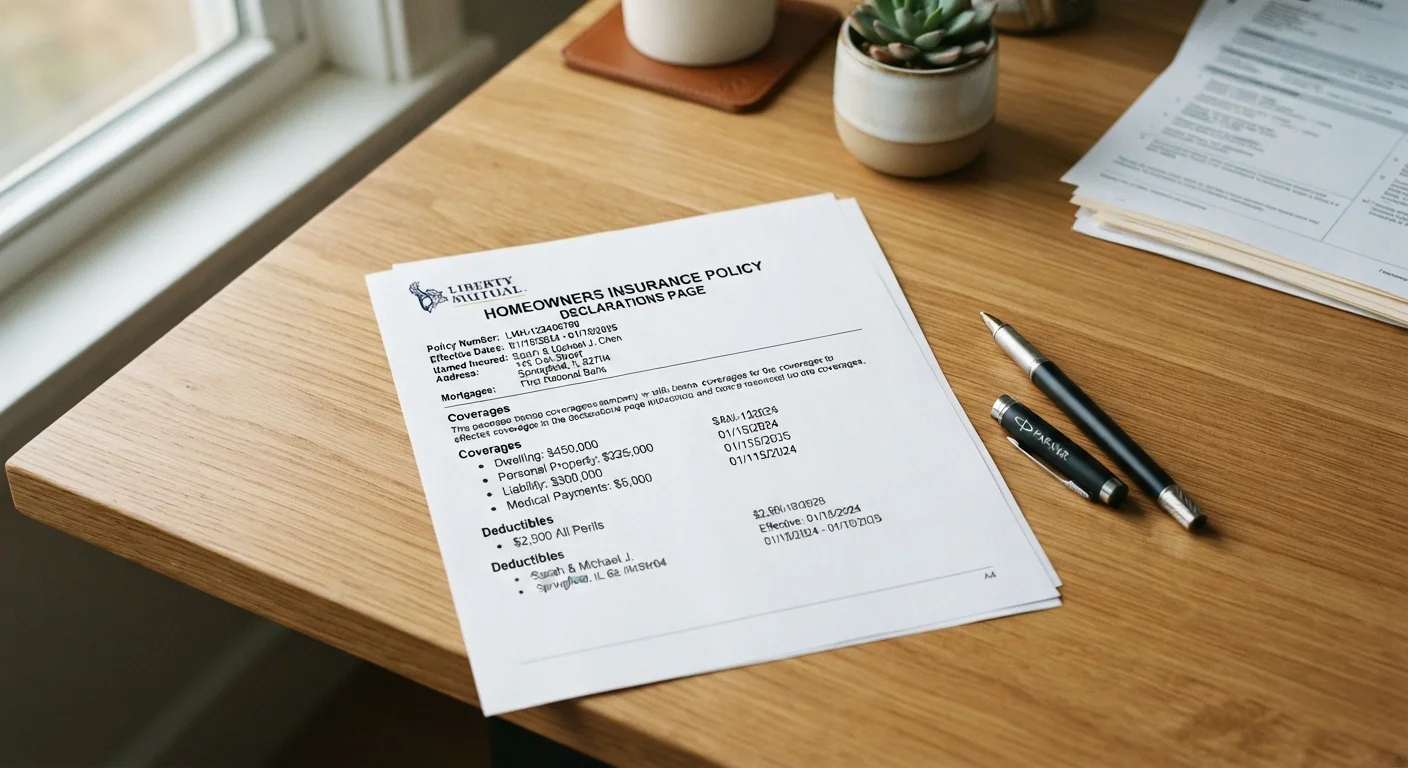
The declarations page is a summary document, not the full insurance contract. It condenses the most important facts about your policy onto a short form: who is covered, what property is covered, how much coverage applies, what it costs, and for how long. The full policy booklet, which can run dozens of pages, contains the definitions, conditions, and exclusions that govern how the declarations page figures actually work.
Think of the dec page as a table of contents for your coverage. Reading it carefully tells you what to look up in the full policy if something seems unclear or insufficient. If you are still sorting out the basics of what home insurance covers, Home Insurance Explained: What a Standard Policy Actually Covers is a useful starting point before working through your dec page line by line.
What you will need
How to read through your declarations page
Work through the dec page in the order it presents information. Each section builds on the last, so skipping around can cause you to miss how figures relate to each other.
Locate and identify your declarations page
When your insurer sends a policy package, the declarations page (sometimes called the "dec page") appears at the front. It is typically one to three pages long. If you cannot find it, log in to your insurer's online portal or call the company directly to request a copy. Renewing policyholders receive an updated dec page each term, so make sure you are looking at the most current version.
Confirm the named insured and property address
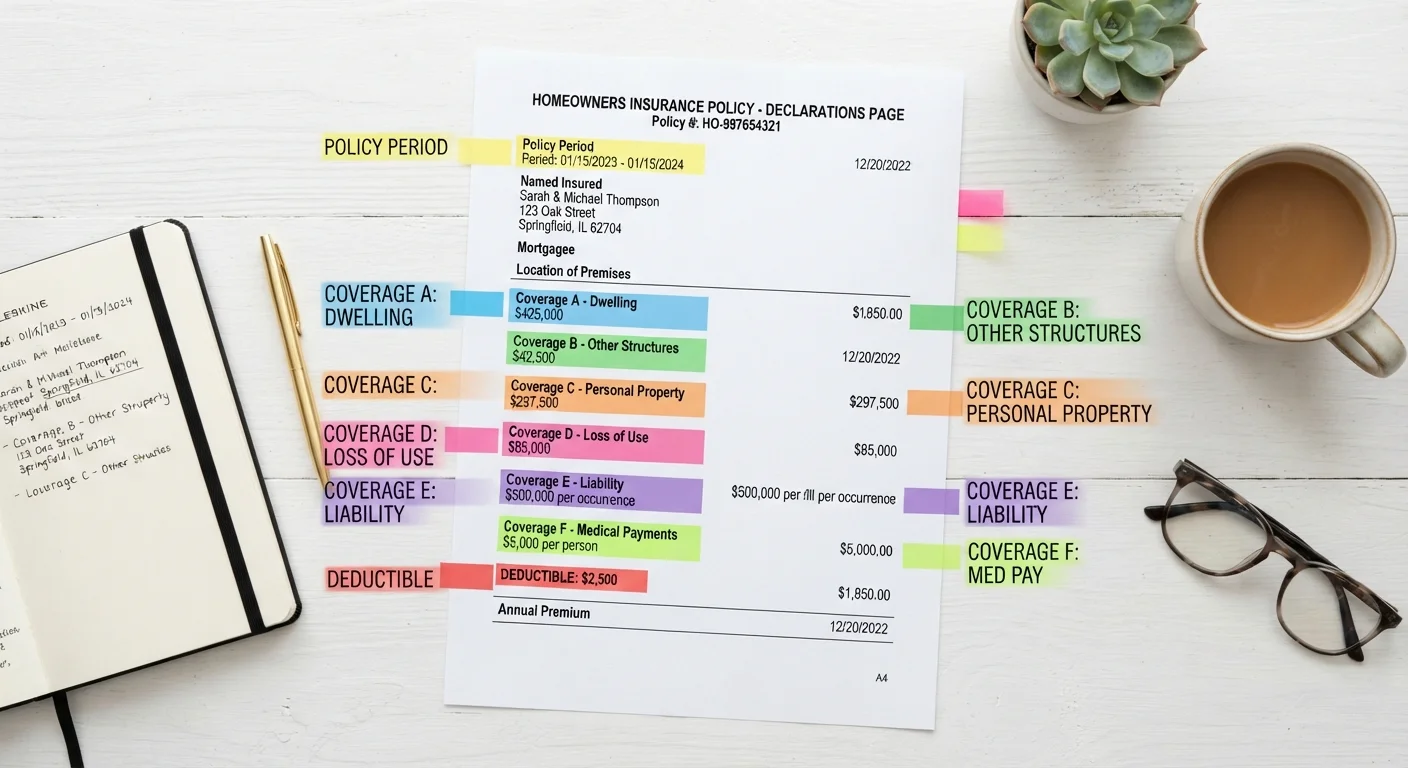
The top section lists the named insured (the person or persons covered under the policy) and the property address. Verify that your legal name is spelled correctly and that the address matches the home being insured. An error here can create complications during a claim. If a co-owner is not listed, contact your insurer to clarify whether that person has coverage under your policy.
Note the policy period
The policy period shows the exact start and end dates of your coverage. Most home insurance policies run for 12 months. If you are within weeks of the end date and have not received a renewal notice, contact your insurer promptly. A lapse in coverage, even a brief one, can leave you financially exposed and may affect your mortgage lender's requirements.
Review your coverage amounts
This is the most detail-heavy section. Look for these specific line items:
- Dwelling coverage (Coverage A): the amount your insurer will pay to repair or rebuild the structure of your home.
- Other structures (Coverage B): covers detached garages, fences, or sheds.
- Personal property (Coverage C): covers your belongings inside the home.
- Loss of use (Coverage D): pays for temporary housing if your home becomes uninhabitable after a covered loss.
- Liability (Coverage E): protects you if someone is injured on your property or you are found legally responsible for damage to others.
- Medical payments (Coverage F): covers minor medical costs for guests injured on your property, regardless of fault.
Cross-referencing these amounts with your home's rebuild cost estimate helps you spot potential gaps. For a broader look at what these coverage types mean in practice, see Home Insurance Explained: What a Standard Policy Actually Covers.
Understand replacement cost vs. actual cash value
Your dec page will indicate whether personal property and dwelling coverage are written on a replacement cost value (RCV) or actual cash value (ACV) basis. RCV pays what it costs to replace a damaged item with a new one of similar kind. ACV pays that amount minus depreciation, which can leave a significant gap after a major loss. This distinction is worth confirming because it directly affects what you receive after a claim.
Find your deductible amounts
A deductible is the amount you pay out of pocket before your insurance coverage applies. Some policies carry separate deductibles for specific perils. Wind and hail deductibles, for example, are sometimes expressed as a percentage of your dwelling coverage rather than a flat dollar amount. If your dwelling is insured for $300,000 and your wind deductible is 2%, you would owe $6,000 before coverage kicks in for a wind-related claim. Check whether your policy lists one deductible or multiple.
Check for endorsements and riders
Endorsements (also called riders) are modifications to the base policy. They can expand coverage (such as scheduled jewelry coverage or water backup protection) or restrict it. Your dec page will list any endorsements attached to your policy, often by name and form number. Review each one and locate the corresponding pages in your full policy booklet to understand what they add or change. Coverage gaps related to missing endorsements are among the most common surprises policyholders face. For more on what standard policies often leave out, see Underinsured at Home: Coverage Gaps That Catch Policyholders Off Guard.
Confirm the premium and payment schedule
The dec page lists your annual premium and may note whether you pay monthly, quarterly, or annually. If your mortgage lender pays from an escrow account, confirm that the amount on the dec page matches what your lender has on file. A mismatch can result in underpayment and a coverage lapse. Also look for any discounts applied, such as multi-policy or protective device discounts, to verify they are reflected accurately.
Compare dec pages when shopping coverage
When comparing policies, place the declarations pages side by side and match each coverage line. A lower premium sometimes reflects lower limits or higher deductibles rather than a genuine cost saving. Checking the same line items across multiple dec pages gives you a consistent basis for comparison. For a similar approach applied to another type of coverage, see how questions to ask before choosing an auto insurance plan can help you evaluate policy documents across categories.
Once you have reviewed every section, write down any amounts or terms you want to discuss with your insurer or a licensed agent. Your coverage choices may also interact with your housing situation. If you rent part of your home or recently transitioned from renting to owning, Renting vs. Owning: How Your Housing Status Shapes Your Insurance Needs covers how those differences affect what you need from a policy.
This article is for general informational purposes only and does not constitute insurance, legal, or financial advice. Coverage terms, limits, and exclusions vary by insurer and state. Review your actual policy documents and consult a licensed insurance agent or adviser for guidance specific to your situation.