
Why coverage gaps are easy to miss
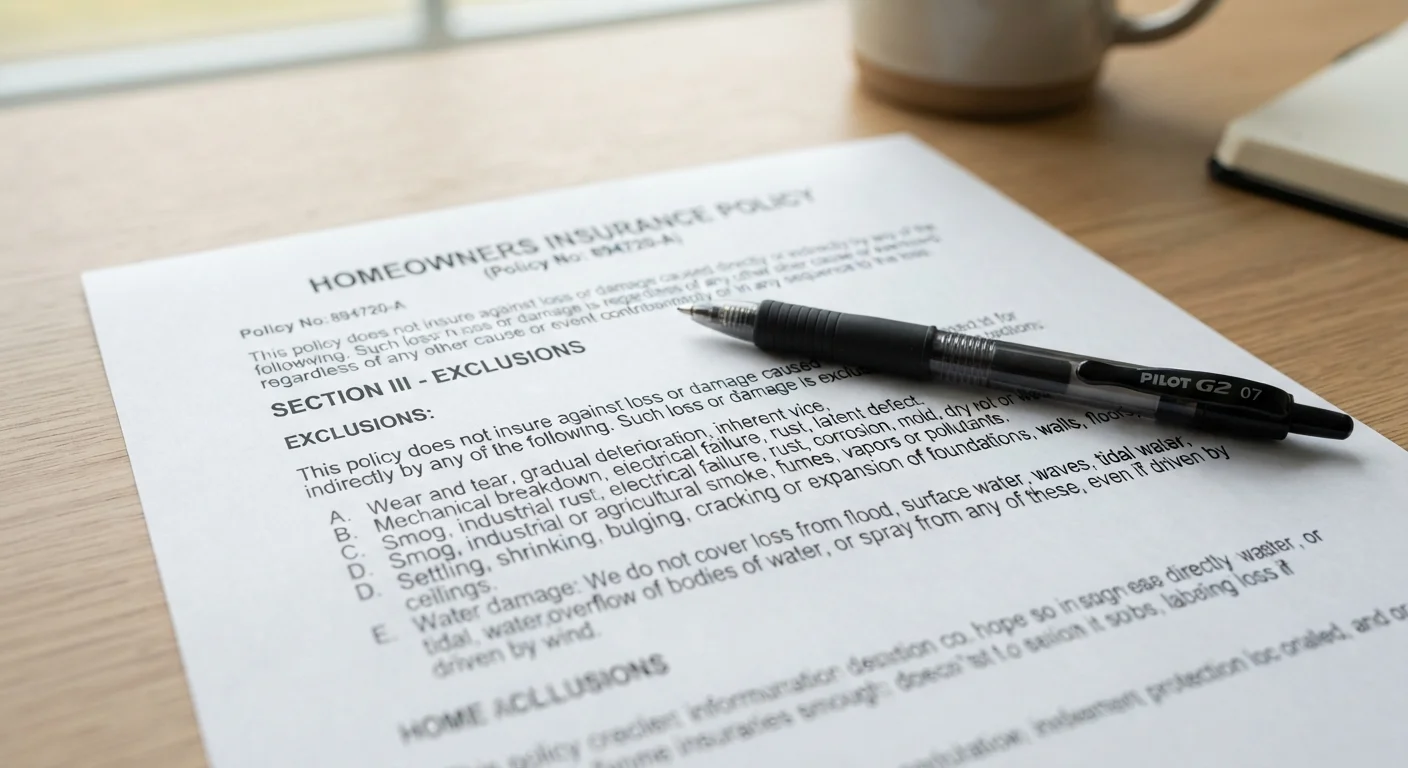
A homeowners or renters policy can feel thorough when you buy it. The documents are long, the coverage categories sound broad, and the premium confirms that you are protected. But standard policies are built around common scenarios, and the exclusions buried in those same documents define what the insurer will not pay.
Gaps tend to surface at the worst moment: after a loss. By then, the options are limited. Understanding where standard policies fall short before something happens is the most practical way to avoid a shortfall. For a plain-language overview of what a baseline policy actually includes, see what a standard policy actually covers.
If you rent rather than own, the same principle applies. Renters who skip insurance entirely face even more exposure when unexpected losses occur.
Common mistakes that leave homeowners underinsured
Assuming flood and earthquake damage are covered under a standard homeowners policy.
Why it happens: Both are common and familiar hazards, so many homeowners assume a comprehensive policy would include them.
Not scheduling high-value personal property such as jewelry, collectibles, or musical instruments.
Why it happens: Personal property coverage sounds all-inclusive, but most policies cap payouts for specific categories regardless of what an item is worth.
Running a home-based business without telling the insurer.
Why it happens: Many people assume that because the business is in their home, the homeowners policy automatically extends to it.
Confusing actual cash value (ACV) with replacement cost value (RCV).
Why it happens: Policy documents use both terms, and the difference is easy to miss. ACV deducts depreciation; RCV pays what it costs to replace the item today.
Letting dwelling coverage limits go unchanged for years after purchase.
Why it happens: Many policyholders set coverage once and rely on automatic renewals without reassessing whether limits still reflect actual rebuild costs.
Overlooking sewer backup and water damage from internal sources.
Why it happens: Water damage is a broad term. Sudden pipe bursts are often covered, but gradual leaks and sewer or drain backups are frequently excluded.
Coverage decisions made at purchase do not automatically update as your home or possessions change. Renovations, new furniture, an inherited collection, or a side business can all create gaps that did not exist when the policy was written. Reviewing the policy alongside your insurer each year is the most direct way to catch those changes before they matter.
For context on how housing status shapes coverage needs overall, this comparison of renting and owning covers what each group should consider. And if you are weighing what a home warranty does versus what insurance does, this breakdown of home warranty versus home insurance draws the line clearly.
This article is for general informational purposes only and does not constitute insurance, legal, or financial advice. Coverage terms, exclusions, and availability vary by insurer and by state. Read your policy documents carefully and consult a licensed insurance professional for guidance specific to your situation.