
Why preparation matters before enrollment opens
Open enrollment is a defined window, typically a few weeks long, during which you can select, change, or drop health coverage for the coming year. Outside that window, your options narrow sharply unless you experience a qualifying life event such as losing a job, getting married, or having a child. Because the deadline is firm, decisions made in haste often carry financial consequences for the full plan year.
Plan details change annually. Premiums, deductibles, copayments, drug formularies, and provider networks are all subject to revision. A plan that worked well last year may no longer cover a medication you take or a specialist you see. Working through a preparation checklist before the window opens gives you time to compare options without pressure.
If you are new to choosing your own coverage, see our plain-English starting point for first-time enrollees before working through the steps below.

What to gather before you start comparing plans
Having the right documents on hand keeps comparisons accurate and fast. Collect these before you open any plan comparison tool.
Last year's Explanation of Benefits
Shows which services you used and what the plan paid versus what you paid, giving you a realistic baseline for comparing new plans.
Current medication list
Needed to check each plan's drug formulary and confirm your prescriptions are covered at an acceptable cost tier.
Provider list
Used to verify that your doctors and preferred hospitals are in-network under any plan you consider.
HealthCare.gov or your state Marketplace login
Gives access to side-by-side plan comparisons and eligibility estimates for premium tax credits.
Medicare Plan Finder (medicare.gov)
Allows Medicare beneficiaries to compare Part D drug plans and Medicare Advantage options by zip code and drug list.
Summary of Benefits and Coverage (SBC) for each plan
A standardized two-page document that makes it easier to compare costs and coverage limits across different plans.
Your open enrollment preparation checklist
Work through each group in order. Items marked must are non-negotiable for making an informed decision. Items marked should are strongly recommended, and nice to have items add useful context if time allows.
Gather your documents
Review your current plan
Compare alternative plans
Confirm enrollment and follow up
Enrollment deadlines are firm
For most Marketplace plans, coverage beginning January 1 requires enrollment by a specific December deadline that varies by state. After the window closes, you generally cannot enroll or switch plans until the next open enrollment period unless you experience a qualifying life event. Check your state's exact deadline before assuming you have more time.
Special considerations for Medicare enrollees
Medicare has its own enrollment periods that differ from the Marketplace calendar. The Annual Enrollment Period for Medicare Advantage and Part D runs October 15 through December 7 each year. Changes made during this window take effect January 1 of the following year.
Missing certain Medicare enrollment windows can trigger permanent late-enrollment penalties added to your monthly premium. Our article on Medicare late enrollment penalties explains which deadlines carry that risk and how the penalty calculations work.
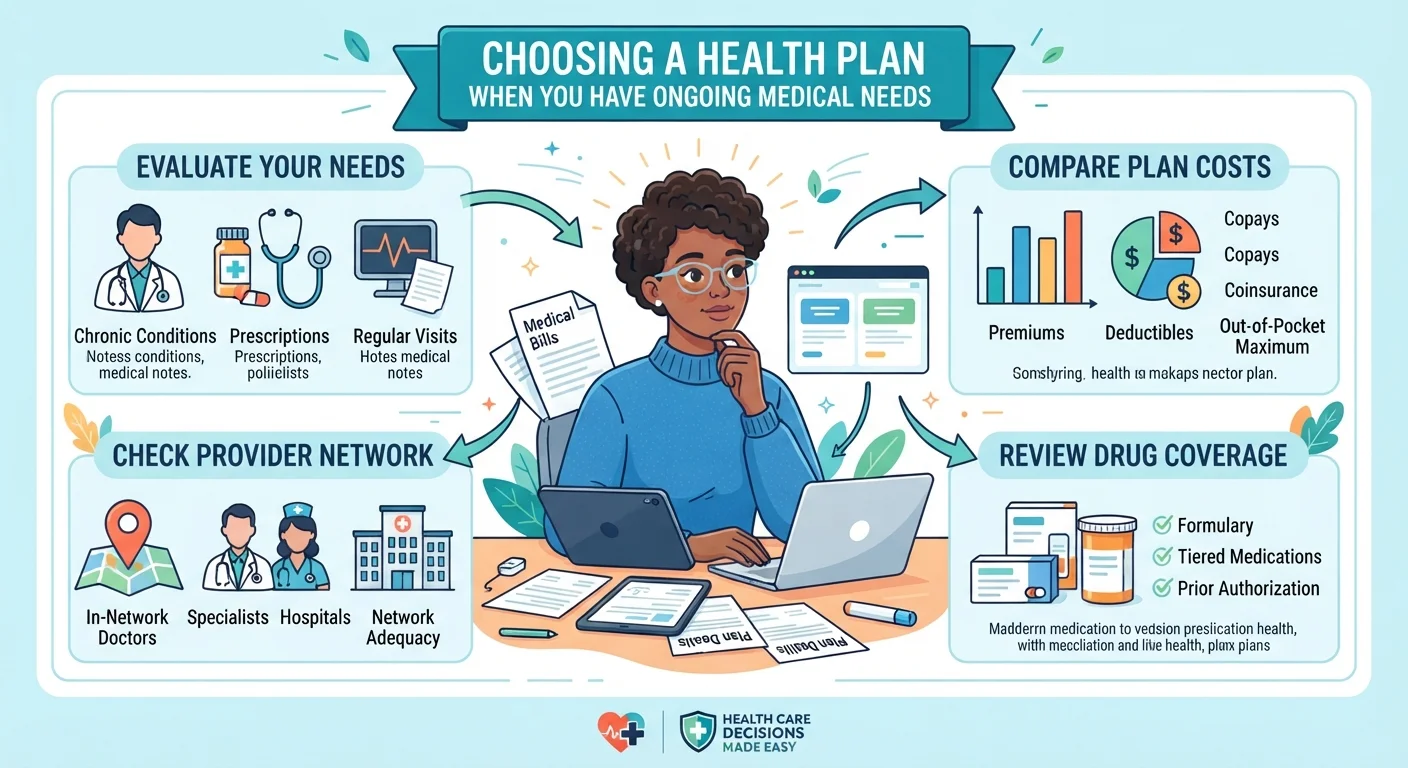
If you manage a chronic condition or take regular prescriptions, plan features such as drug tier placement and specialist referral requirements deserve close attention. See our guide on choosing a health plan when you have ongoing medical needs for a detailed breakdown of what to weigh.
For a broader look at Medicare options, senior discounts, and retirement resources, the Senior hub covers those topics in one place.
Auto-renewal does not mean your plan is unchanged
If you do nothing during open enrollment, many insurers automatically re-enroll you in your current plan or a similar one. However, that plan's costs and network may have changed. Relying on auto-renewal without reviewing the updated terms can result in surprise costs or a lapsed relationship with a provider who is no longer in-network.
Marketplace income estimates affect your tax credit
If you receive a premium tax credit through the Marketplace, the amount is based on your projected income for the coming year. Underestimating income can create a repayment obligation when you file your tax return. Update your income estimate each enrollment period and report income changes during the year through your Marketplace account.
This article is for general informational purposes only and is not medical or financial advice. Health plan rules, costs, and eligibility vary by insurer, state, and individual circumstance. Consult a licensed insurance agent or a certified enrollment counselor for guidance specific to your situation.