
What a high-yield savings account actually is
A high-yield savings account is a deposit account that pays a higher interest rate than a conventional savings account at a traditional bank. The core mechanics are the same: you deposit money, the bank pays interest on the balance, and your funds stay liquid. The difference is the rate, which can be substantially higher because online banks carry lower overhead costs than institutions with branch networks.
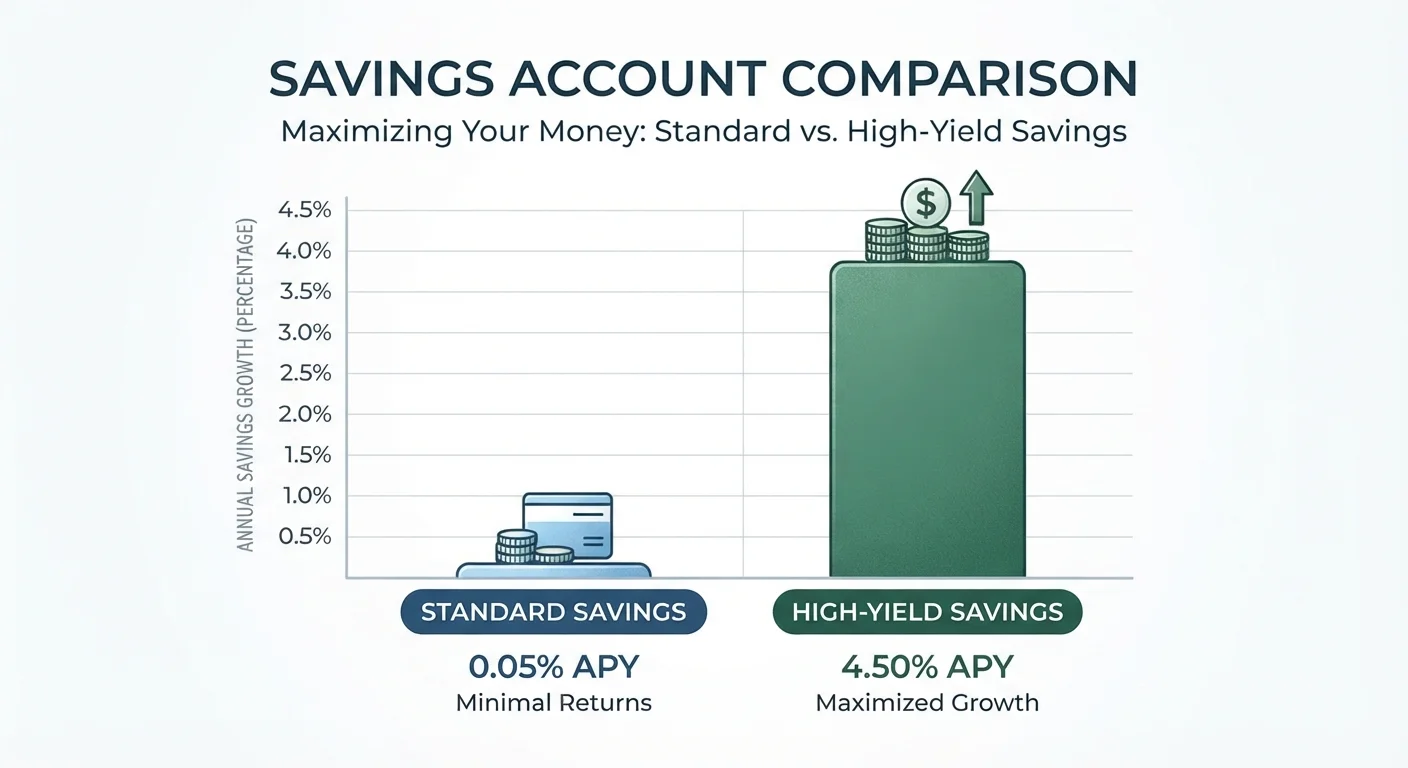
Before comparing specific accounts, it helps to understand how the rate is expressed. The figure that matters most is the Annual Percentage Yield (APY), because it reflects the effect of compounding. A bank paying 0.01% APY and one paying 4.5% APY on the same $10,000 balance produce very different dollar amounts of interest over a year. For a detailed explanation of that distinction, APY vs. APR explained covers the difference clearly.
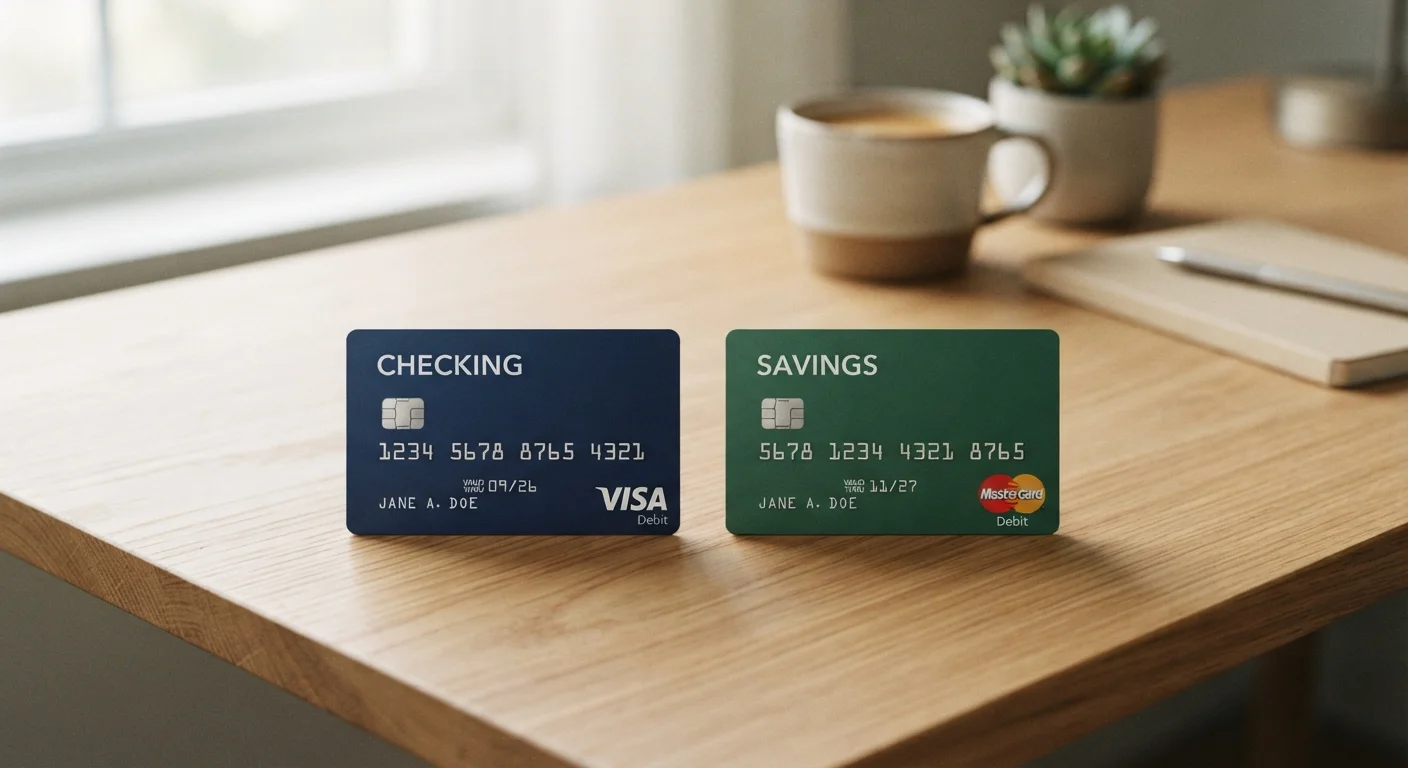
High-yield savings accounts are separate from checking accounts, which are designed for daily spending. If you are unclear on how the two account types divide responsibilities in a personal finance setup, checking vs. savings accounts explains when each one fits.
The advantages
The most direct benefit is earning more interest on money that would otherwise sit in a low-rate account. That difference compounds over time.
Higher interest rate than standard savings accounts
High-yield savings accounts frequently pay many times the national average rate for traditional savings accounts. Over months and years, that gap compounds into a noticeable difference in earned interest on the same balance.
FDIC insurance protects deposited funds
Accounts held at FDIC-member banks are insured up to $250,000 per depositor, per institution. This protection applies to most high-yield accounts the same way it applies to accounts at brick-and-mortar banks.
Funds remain accessible without penalty
Unlike certificates of deposit, high-yield savings accounts do not lock up money for a fixed term. Savers can withdraw funds when needed, which makes these accounts practical for emergency reserves.
Low or no minimum balance requirements at many institutions
A number of online banks offering high-yield accounts do not require a large minimum deposit to open or maintain the account, making them accessible to savers who are just starting out.
FDIC coverage means the higher rate does not come with added risk to principal, at least up to the insurance limit. The liquidity advantage over certificates of deposit also matters: funds are available when needed, which makes high-yield accounts well suited to emergency reserves. For readers working on building a savings buffer that lasts through the month, why savings disappear before month ends addresses some of the habits that undercut that effort.
The limitations
The trade-offs are real and worth examining before opening an account.
Interest rates are variable and can fall
The rate on a high-yield savings account is not fixed. Institutions adjust rates in response to Federal Reserve policy and competitive conditions, so a rate that looks strong today may be lower in six months.
Most providers operate online only
Many high-yield accounts are offered by online banks without physical branch networks. Customers who prefer face-to-face service or need to deposit cash regularly may find this format inconvenient.
Returns do not outpace long-term inflation consistently
Even at elevated rates, savings account yields may not keep pace with inflation over the long run. For long-term financial goals, a savings account alone is generally not a substitute for a broader investment strategy.
Transfer delays can slow access to funds
Moving money from an online high-yield account to an external checking account can take one to three business days. In a genuine cash emergency, that delay can be a practical problem.
Some accounts carry fees that reduce net yield
Monthly maintenance fees, excess withdrawal fees, or minimum balance penalties exist at some institutions. These charges can partially or fully offset the interest advantage the account advertises.
APY is the number to compare
When comparing savings accounts, use the Annual Percentage Yield rather than the nominal interest rate. APY accounts for compounding frequency, so it gives a more accurate picture of what you will actually earn over a year. For a fuller explanation of how APY differs from APR, see APY vs. APR explained.
The variable rate is the most consequential limitation. An account paying an attractive rate today carries no guarantee that rate holds for the life of your savings goal. Rate cuts follow shifts in Federal Reserve policy, and institutions can lower their savings rates faster than they raise them. Savers who open accounts expecting a fixed return can find themselves earning much less a year later with no action taken on their end.
The online-only format at many providers is a practical consideration, not just a convenience issue. Depositing physical cash, getting in-person assistance with an account dispute, or walking into a branch during a stressful financial moment are not options at most online banks. For some savers, that trade-off is minor. For others, it is a genuine barrier.
This article is for general informational purposes only and does not constitute personalized financial advice. Consult a licensed financial adviser for guidance suited to your individual circumstances.
When these accounts fit and when they do not
High-yield savings accounts work well for money that needs to stay liquid but does not need to be spent soon. Emergency funds, short-term savings goals (a home repair reserve, a travel fund), and cash held between financial decisions are common uses.
They are less suitable as a long-term wealth-building vehicle. Over a decade or more, inflation can erode the purchasing power of money held entirely in a savings account, even a high-yielding one. A broader financial plan typically includes accounts and instruments beyond savings deposits. For savers exploring how a Health Savings Account differs in structure and tax treatment, HSA eligibility and how funds work covers that separately.
The right question is not whether a high-yield savings account is good or bad in general. It is whether the structure fits the specific job you need the account to do.