


Why senior travel planning requires more groundwork
Travel at any age requires planning. For older adults, a few categories of preparation carry more weight because the consequences of skipping them can be harder to manage far from home. Health coverage gaps, accessibility shortfalls at a destination, and medication logistics are details that may seem minor during booking but can become significant mid-trip.
This checklist covers the planning steps that older travelers most often miss, not because they are careless, but because standard travel advice rarely addresses them. Work through each section before you finalize bookings, and revisit it again about two weeks before departure.
For travelers watching costs, senior discounts on transportation and lodging are worth researching early. Many discounts are not posted publicly and require asking directly.
Health and medical preparation
This is the area where gaps in planning are most consequential. Original Medicare (Parts A and B) generally does not pay for medical care received outside the United States, with narrow exceptions. A medical emergency abroad can generate large out-of-pocket costs without supplemental coverage in place.
Travel insurance for older adults works differently from standard policies. Age limits, pre-existing condition look-back periods, and medical evacuation benefit caps vary by provider, so reading the policy document before purchasing is necessary, not optional. For a fuller breakdown of what to watch for, see our article on coverage gaps in senior travel insurance.
Health coverage and insurance
Medication logistics
Accessibility verification
Documents and contacts
Financial and practical preparation
Medicare generally stops at the U.S. border
Original Medicare Parts A and B do not cover most medical care received outside the United States. Some Medigap plans include a foreign travel emergency benefit, but these typically carry a lifetime maximum and apply only to the first 60 days of a trip. Verify the specifics of your plan before departure, and consult a licensed insurance agent if you have questions about your coverage.
Pre-existing condition clauses vary significantly
Many travel insurance policies include a look-back period, typically 60 to 180 days, during which any condition that was treated, diagnosed, or showed symptoms may be considered pre-existing and excluded from coverage. The definition varies by policy, so read the actual exclusions section rather than relying on a summary. If a condition is managed but stable, some policies offer waivers; these usually require purchasing the policy within a set window after your initial trip deposit.
Accessibility and destination logistics
Accessibility information in travel marketing is often imprecise. A hotel described as "accessible" may have roll-in showers in only a few room types, or the accessible entrance may require navigating around the building. Cruise ships vary widely in how well they accommodate mobility aids, particularly in port excursions where tender boats or uneven docks may be involved.
Verifying specifics directly with hotels, airlines, and tour operators before booking reduces the chance of arriving at a destination that does not meet actual needs. Airlines are required to accommodate passengers with disabilities under the Air Carrier Access Act, but the specifics of what you need should be communicated at booking, not at the gate.
If you are weighing different ways to structure a trip, the trade-offs between package deals and booking separately are worth understanding, particularly when accessibility requirements complicate standard packages.
Documents and emergency contacts
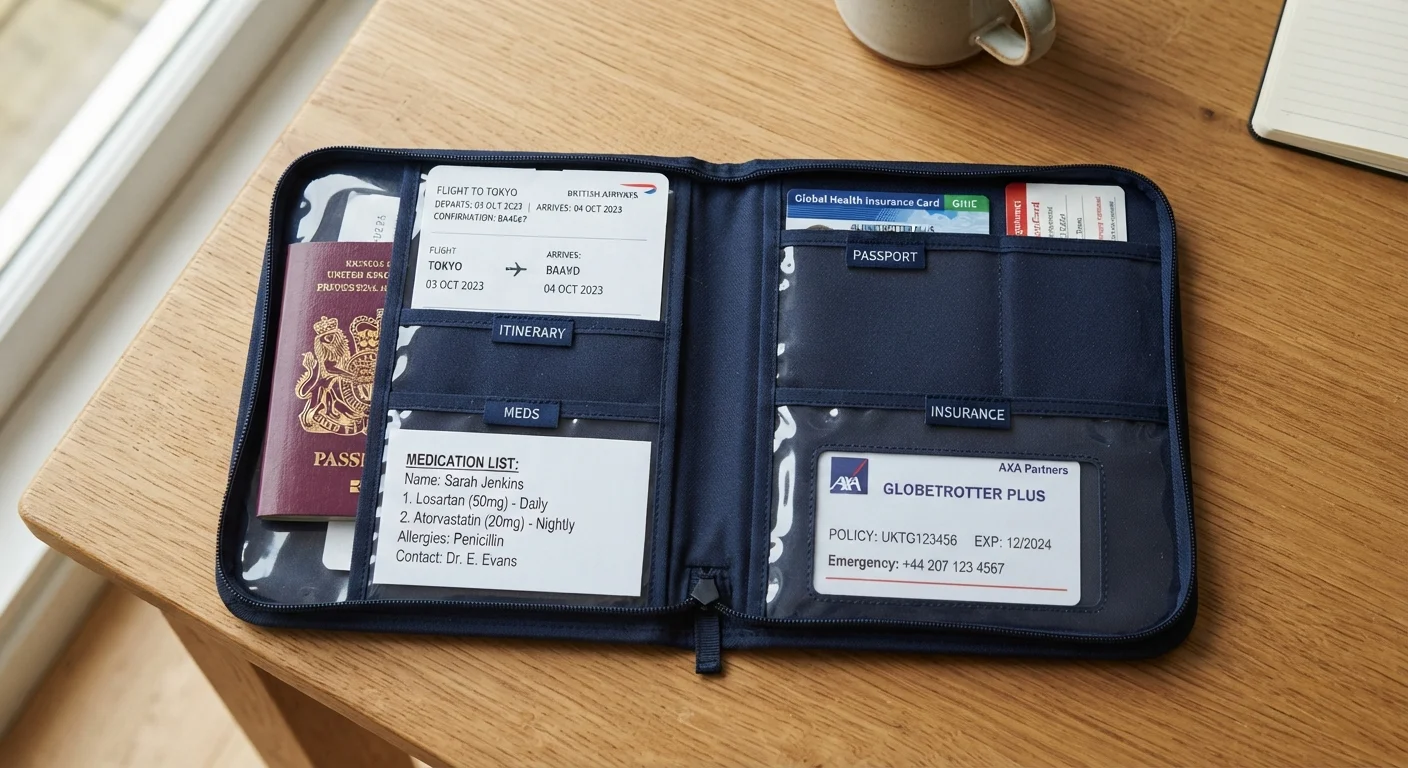
Many travelers keep documents digitally, which works until a phone battery dies or service is unavailable. A printed backup of the key information listed in this checklist's document group takes minutes to prepare and can matter significantly in an emergency abroad.
Travel also offers a natural prompt to review related legal and financial documents at home. If a trip involves extended time away, confirming that a trusted person has access to necessary information is sensible. The year-end personal finance review checklist includes useful prompts for getting those documents organized.
This article is for general informational purposes only and does not constitute medical, legal, financial, or insurance advice. Verify health coverage details with your insurer, consult a physician before traveling with significant health conditions, and check current entry requirements with official government sources before any international trip.